The top things to do in Lyon
Last updated: May 2026
Have you heard that 'second' cities are very on trend this year? Which means, move over Paris — it's Lyon's moment in the sun. If Lyon isn't already on your radar, it should be: the city that sits quietly in the shadow of Paris is France's food capital, has a gorgeous UNESCO-listed Renaissance quarter, two rivers running through it (yes, two), and a bright pink praline obsession. It ends up in everything — desserts, pastries, brioche, you name it. And it turns out, everything tastes better with pink praline. Trust me.
We spent a long weekend there and could easily have stayed longer. Here's what I'd prioritise and where I’d stay if you've got 48 hours.
This post contains affiliate links. If you book through one of my links I earn a small commission — at no extra cost to you. I only recommend experiences I genuinely believe are worth your time and money.
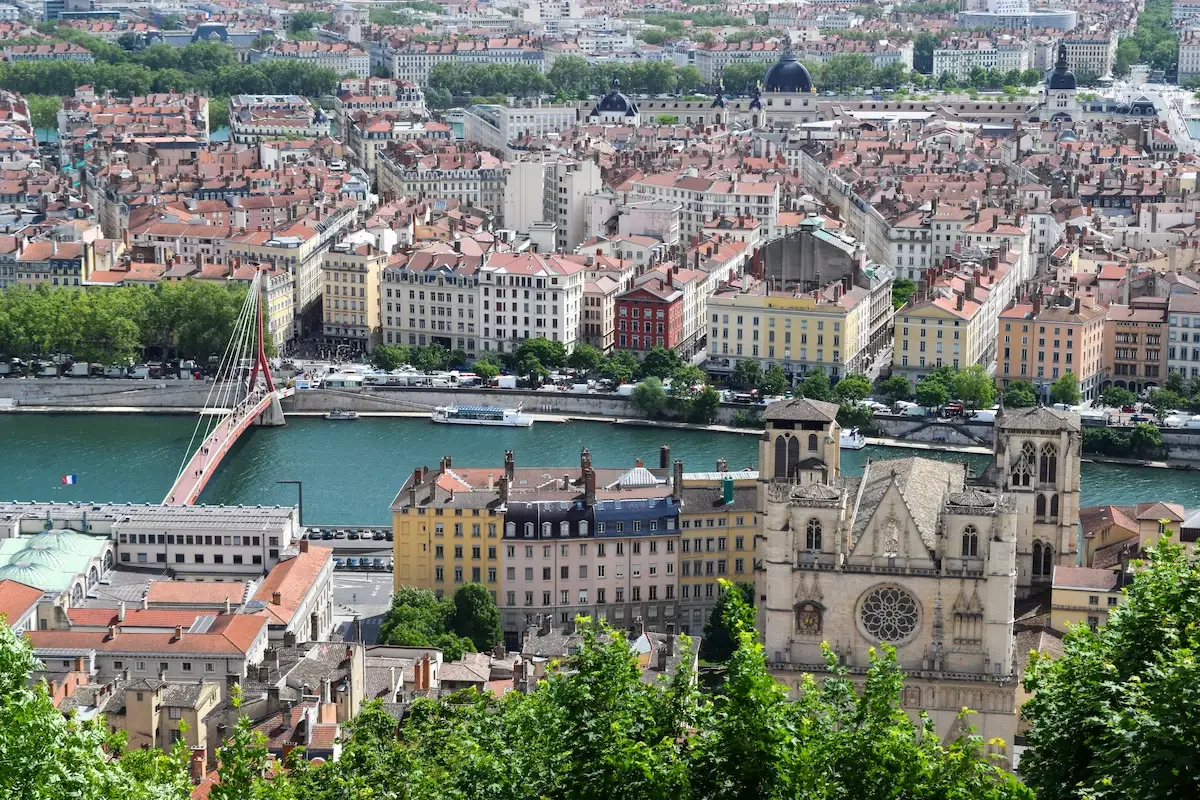
1. Wander Old Lyon and explore the hidden passageways
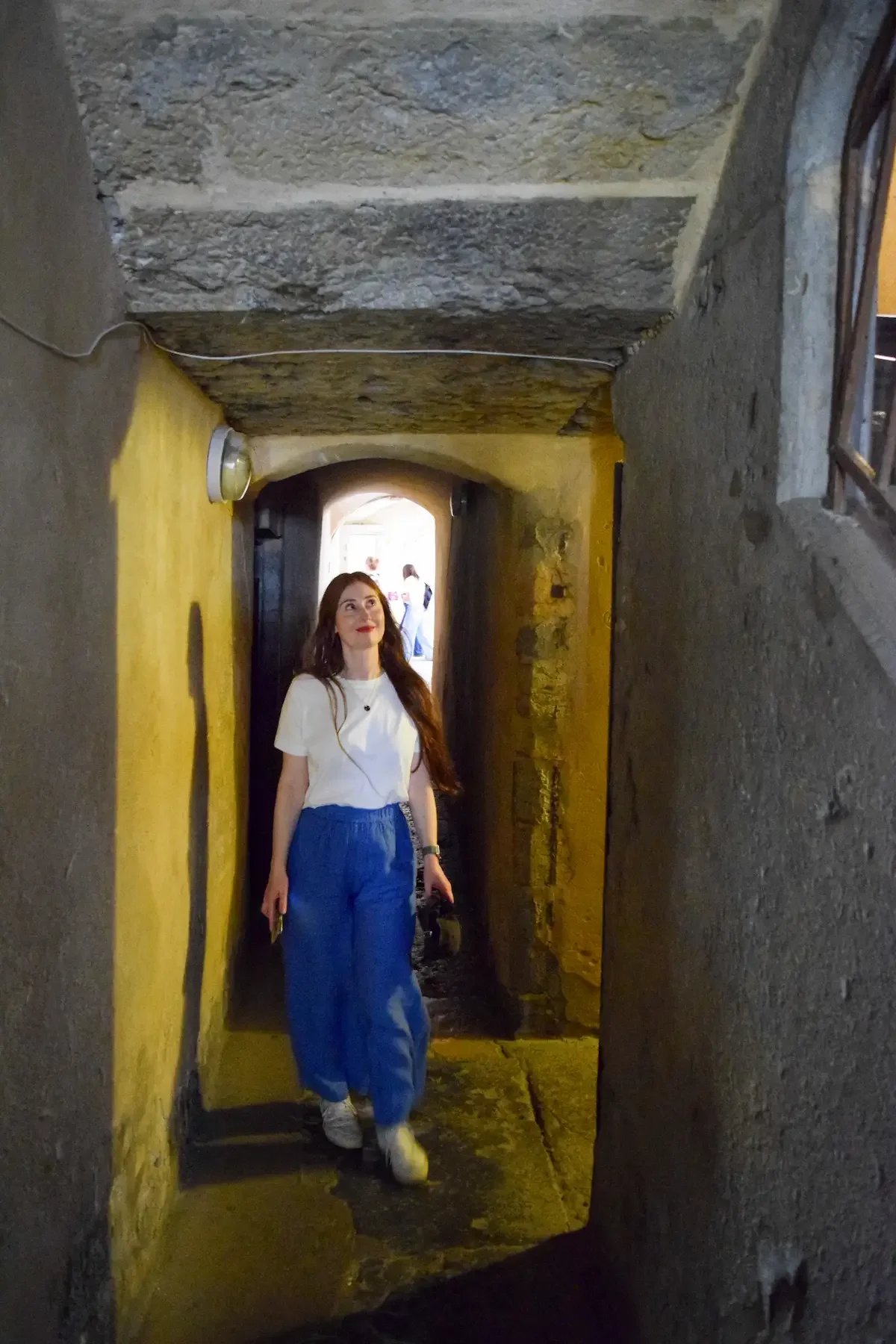
Vieux Lyon (literally 'Old Lyon') is one of the largest Renaissance districts in Europe and a UNESCO World Heritage site. But the thing that makes it really special is the traboules. They are covered passageways that thread through buildings and courtyards —who needs to walk around a building when you could walk through it, right? They were originally built so silk workers could move bolts of fabric across the city without getting them wet. Later, they were used by the French Resistance during WWII to evade the Nazis.
About 80 are open to the public today. You can find them by looking for doors that are marked with small bronze plaques, and if you have a map, you can wander between them yourself. But considering their fascinating history, I think it’s worth doing a guided tour so you can learn all about them as you explore.
This guided traboules walking tour was recommended to me and gets you into the lesser-known passageways the casual wanderer would walk straight past.
2. Climb (or funicular) up to Fourvière Basilica
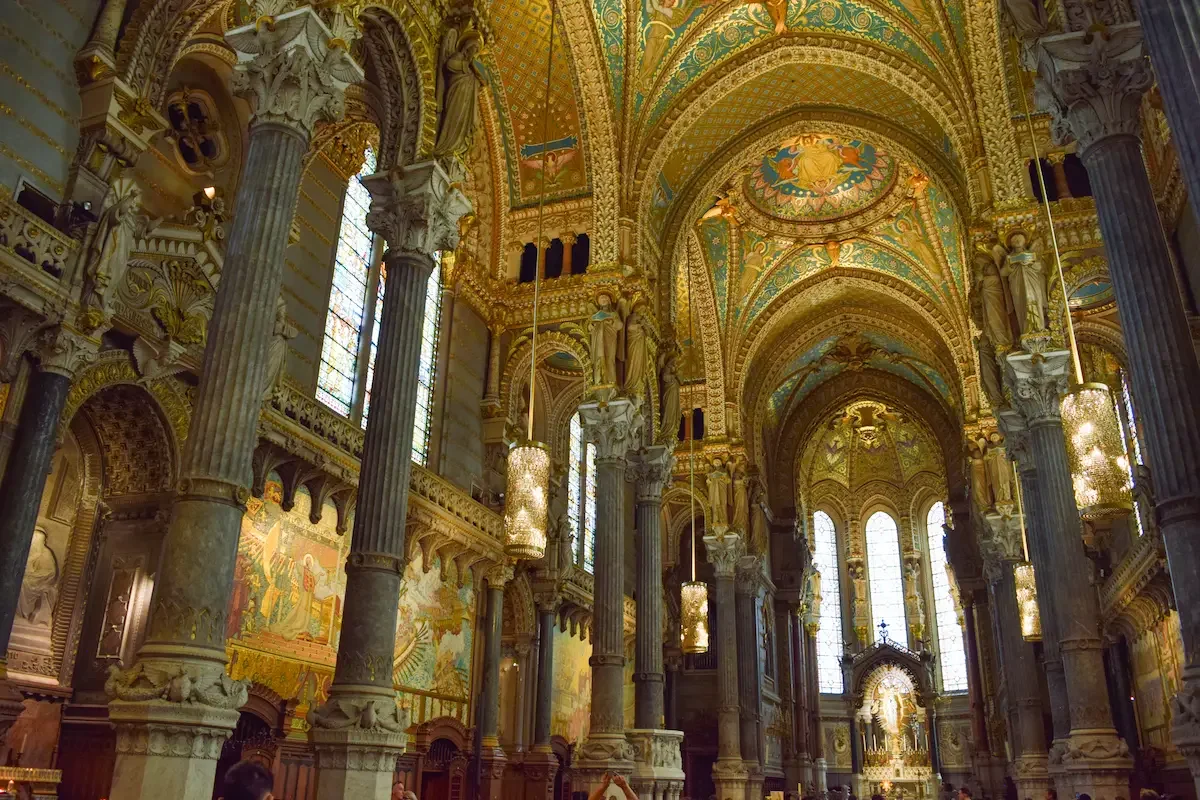
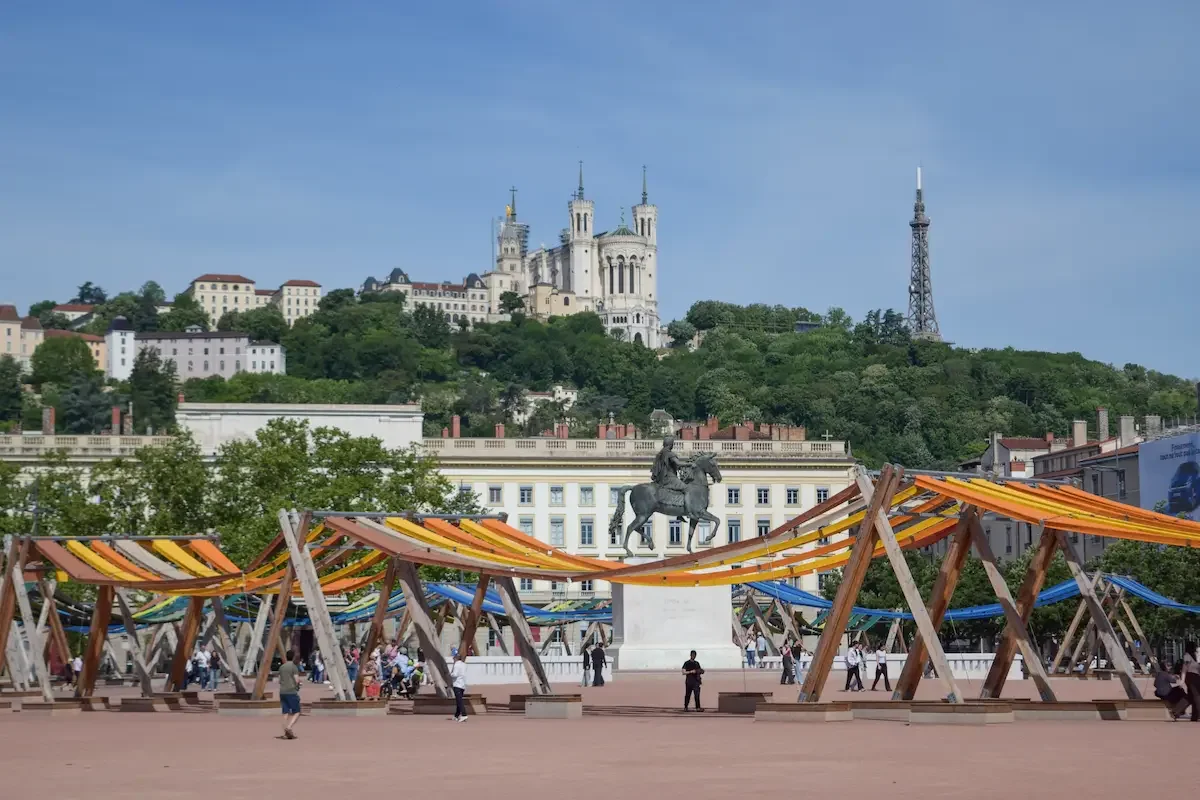
Lyon's Basilica of Notre-Dame de Fourvière sits on the hill above Vieux Lyon and is visible from pretty much everywhere in the city — I noticed it the moment we arrived at our hotel in Bellecour. It's worth a visit for two reasons: first, it's an extraordinarily beautiful church (even by European standards!), with intricate mosaics, gold bling and stained glass windows. And second, the terrace outside offers the best views of Lyon.
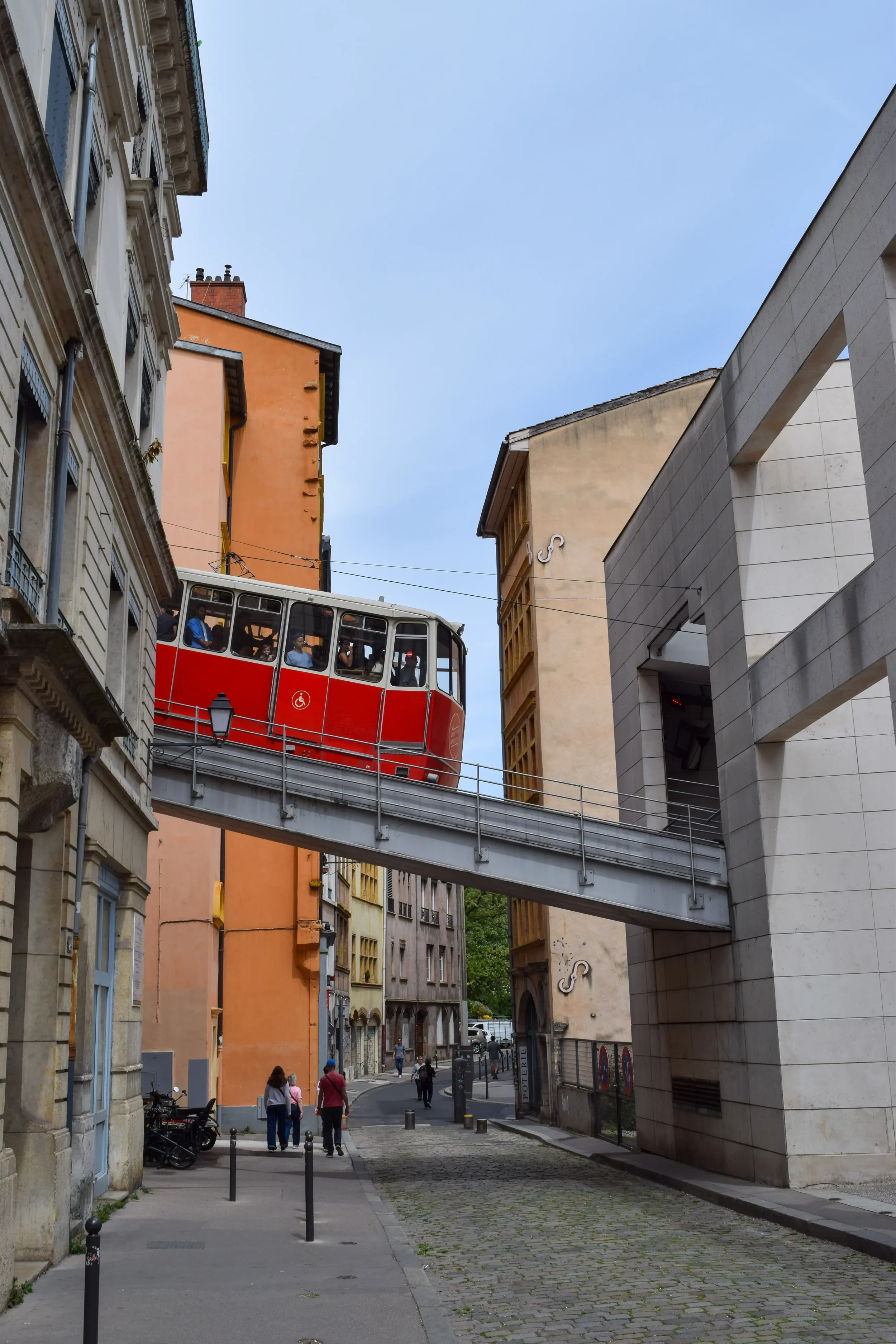
It's a steep 20-minute walk to get up there, but if you'd rather save energy for the rest of the day like we did, you can catch the funicular from Vieux-Lyon metro station. It goes every 5–10 minutes and it'll have you up there in three minutes flat for the price of a standard metro ticket (you can tap on with your bank card or phone). While you're up there, the Roman ruins of Lugdunum are a short walk further along the hill — two well-preserved amphitheatres, free to wander, and rarely crowded.
3. Eat at a proper bouchon
Lyon is France's culinary capital and its bouchons are the heart of it. These are small, traditional restaurants serving Lyonnais classics like quenelles, andouillette, salade lyonnaise and tablier de sapeur, in a rustic setting. There's an official certification system (Les Bouchons Lyonnais) and only around 20 restaurants in the city carry it, so it's worth looking for the plaque on the door.
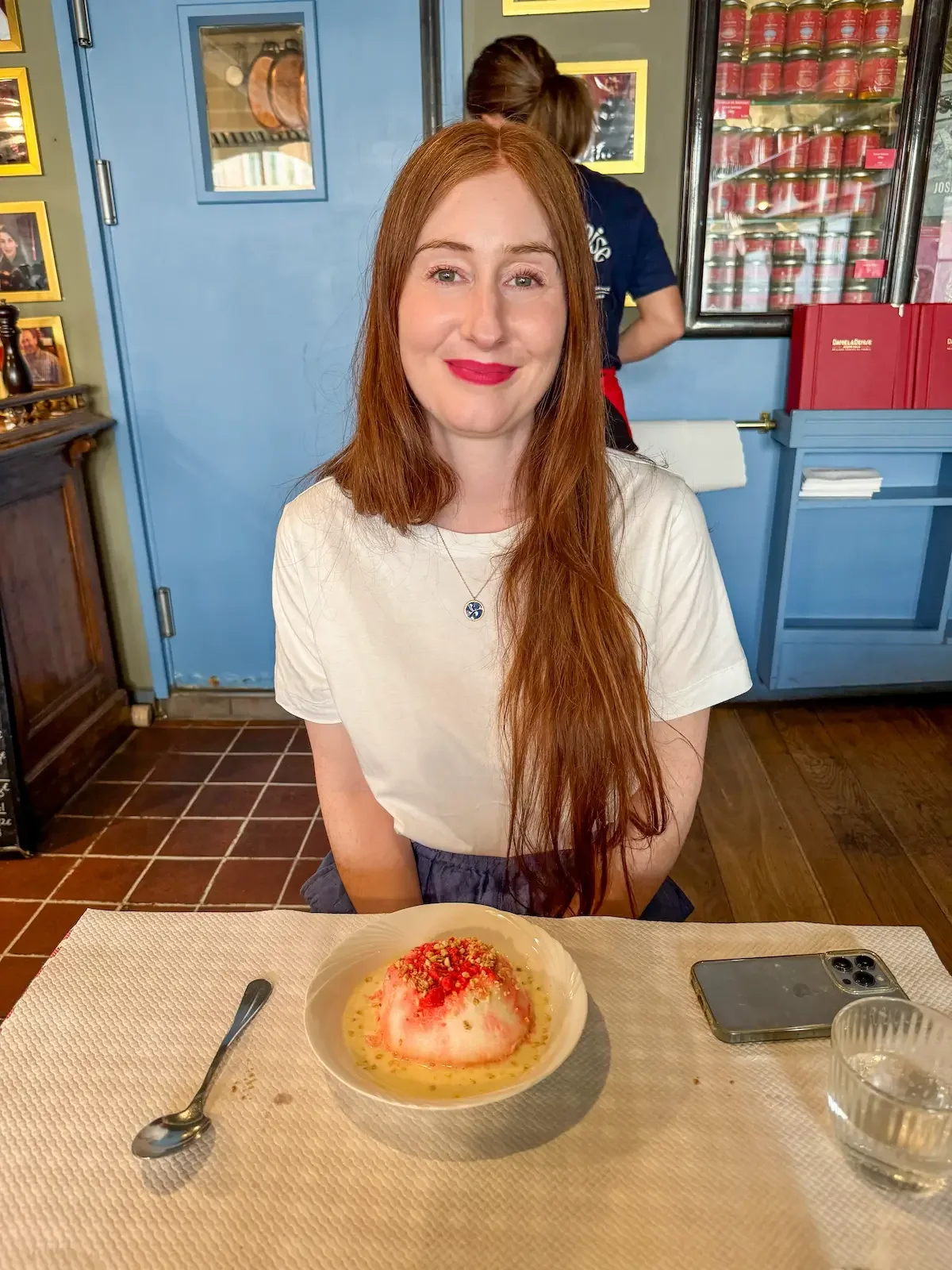
We went to two on our trip: Daniel & Denise Saint Jean and Café Comptoir Abel. We enjoyed both, but if you had to choose one my recommendation would be Daniel & Denise. We spent a delightful two and a half hours there sampling some of the safer options (no tripe for us!), including the pâté en croûte, a lentil salad, the pike quenelle and the priest's omelette, which were both delicious. The dessert was where we had our first encounter with Lyon's praline obsession — brioche toast with pink praline sauce (poured out of a pan at the table) and a floating island (a soft meringue in cream) sprinkled with hard praline. I'd go back just for the desserts.
Make sure you book ahead, especially at weekends as they fill up quickly. Many bouchons are also closed on Sundays, though Café Comptoir Abel is one of the exceptions.
4. Try the praline baked goods at Pralus
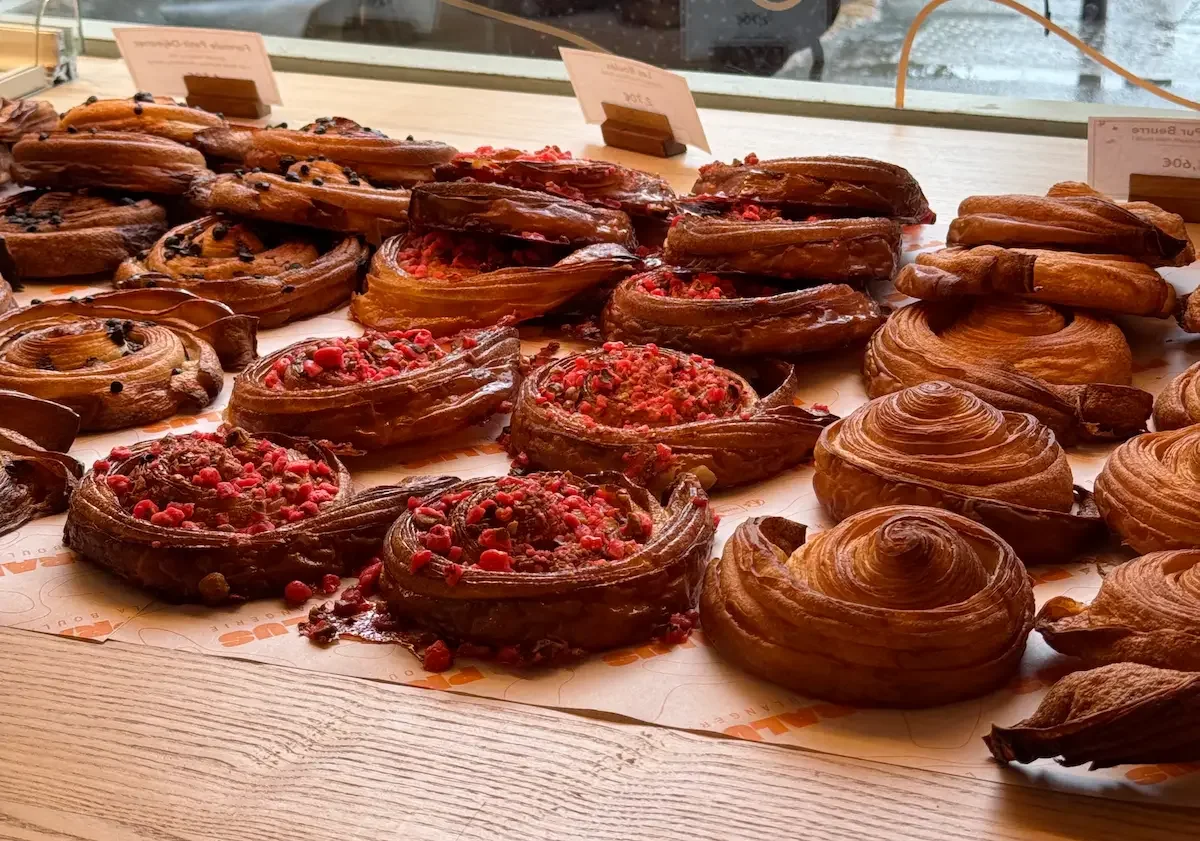
There's no shortage of praline in Lyon — you'll find it on most desserts in restaurants and cafés — but it's still worth visiting the OG. Pralus is a Lyon institution: the family-run patisserie that essentially invented the praline brioche back in 1955, when Auguste Pralus folded crushed pink pralines into a buttery brioche dough and called it the Praluline. It's now one of the most famous things to eat in Lyon, and rightly so.
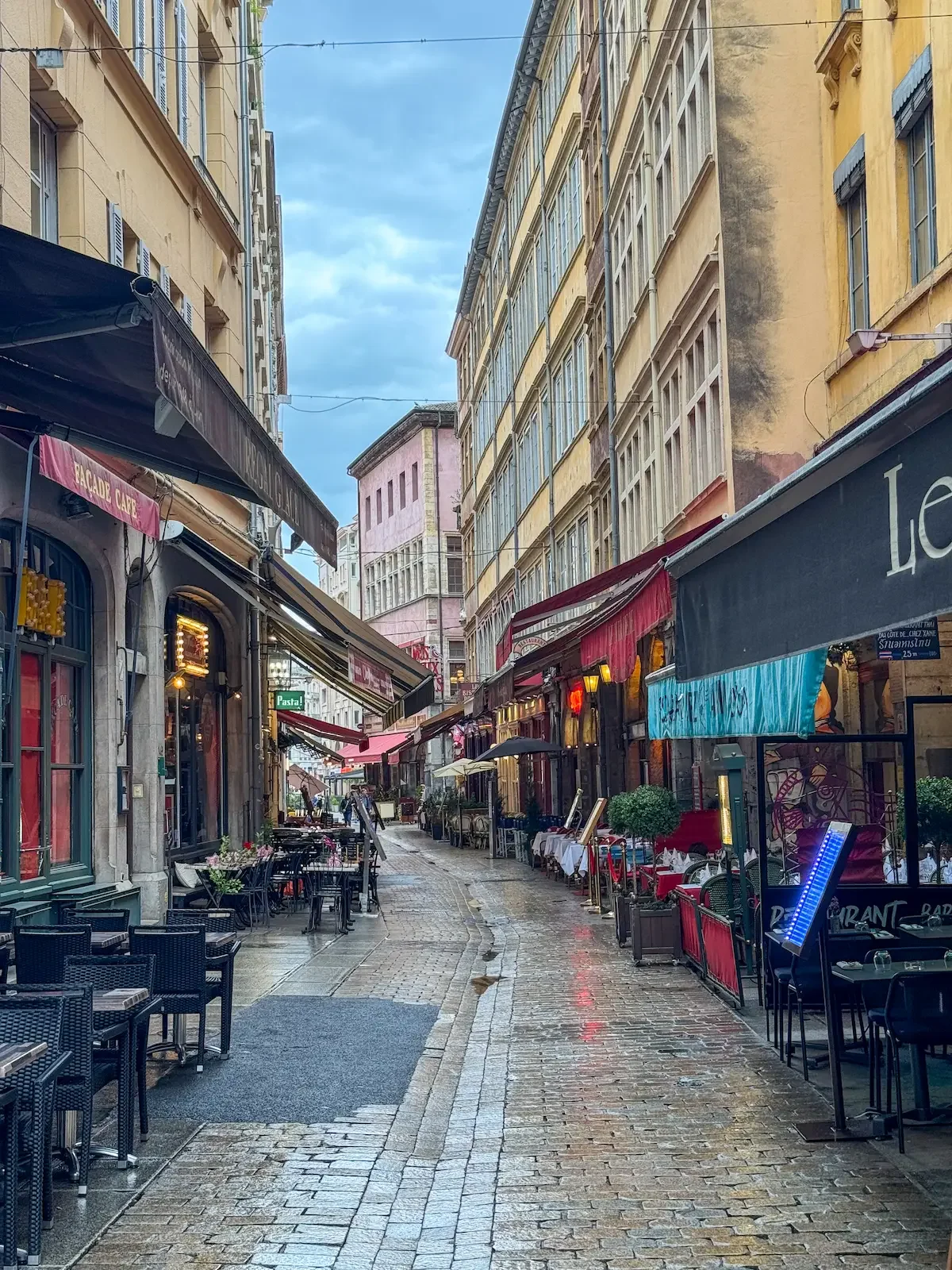
There are two Pralus spots worth knowing about. Head to Pralus la Boulangerie on Quai Saint-Antoine for the praline tart and the praline-filled roulezienne — they are absurdly delicious — buttery, crunchy, vivid pink, with just the right amount of sweetness. For the famous Praluline brioche itself, you'll want Pralus: Pâtissier Chocolatier on Rue de Brest, the original chocolate boutique on the Presqu'île. You could even pick up a whole loaf to take home — it travels well and makes for an excellent snack on your way home, or the day after, when the post-holiday blues are setting in.
Both spots get busy mid-morning, so go early if you can. Note that the Rue de Brest shop is closed on Sundays.
5. Browse Les Halles de Lyon Paul Bocuse
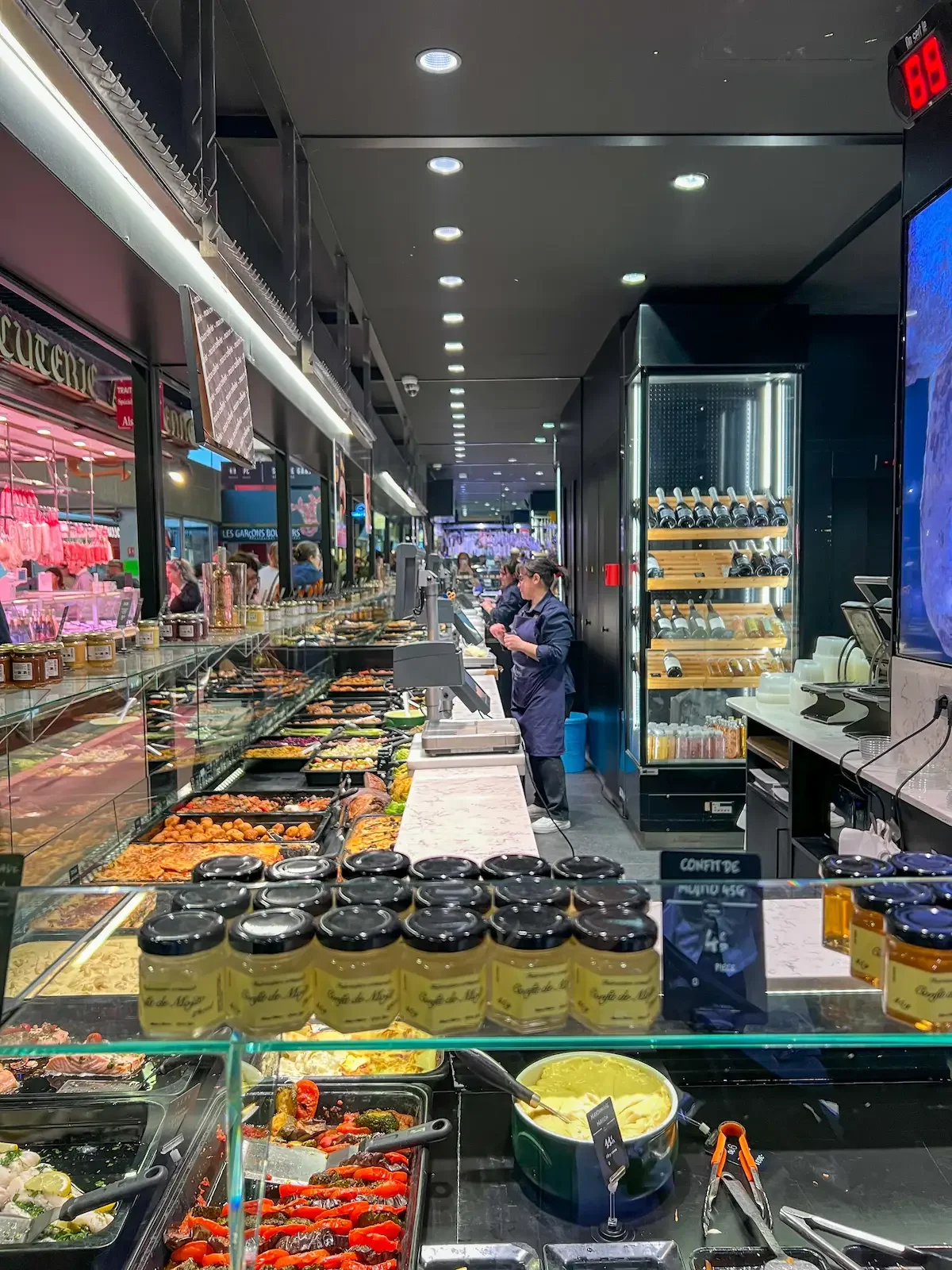
If the bouchons are Lyon's culinary heart, Les Halles de Lyon Paul Bocuse is its larder. It's a covered food market named after Lyon's most famous chef, packed with cheese, charcuterie, pastry and oyster bars and unlike many tourist-trap markets, it's where locals actually shop. We went there for an early lunch on Sunday because we'd read it closes at 1pm — but although some stalls started packing up around then, plenty were still open when we left at 2pm.
Go hungry. Have a plate of oysters and a glass of white at one of the standing bars, then pick up some saucisson and a tub of Cervelle de Canut, a delicious herby cheese spread. Don't miss the pâté en croûte either: a layered pork pâté baked inside a pastry crust, served cold and sliced like a fancy pork pie. Lyon takes it so seriously that the city hosts the annual World Pâté-en-Croûte Championship, which tells you everything.
6. Spend an afternoon in Croix-Rousse
Croix-Rousse is the hill above the Presqu'île on the other side from Fourvière — historically the silk-weavers' quarter, now Lyon's most charming neighbourhood. It feels noticeably different from the old town: more bohemian, more lived-in, with independent shops, cafés, and street art lining the streets that wind down the slope.
We only had time for a quick wander on this trip, but it's somewhere I'd go back to and spend a proper afternoon. If you go on a Tuesday, Friday or Sunday morning, the market along Boulevard de la Croix-Rousse is one of the best in the city. Otherwise, just wander; the slopes have more traboules to explore, and the views back over the Presqu'île are worth the climb.
7. See the giraffes at Parc de la Tête d'Or
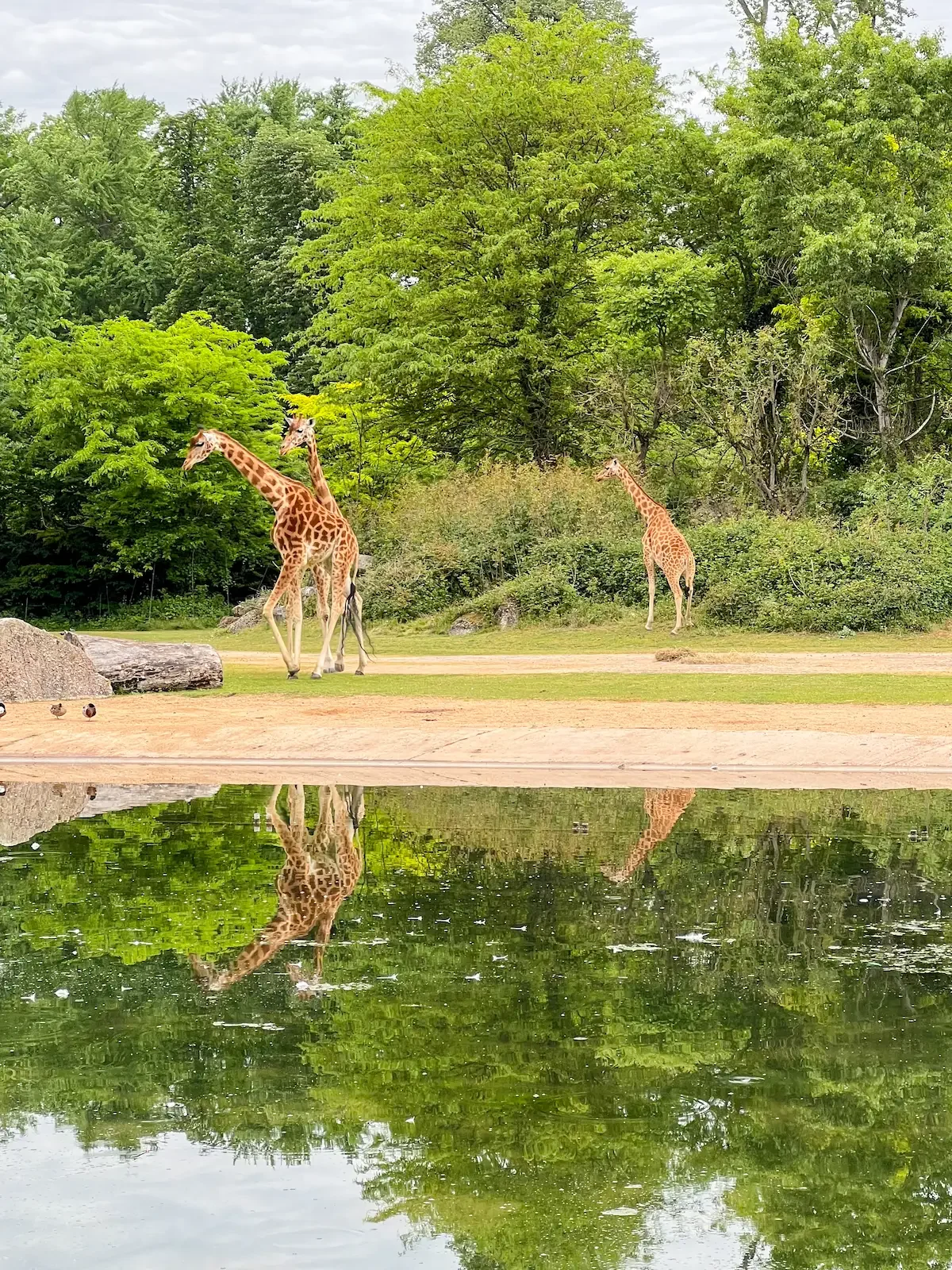
Like many French cities, lots of restaurants and shops are closed on Sundays in Lyon — which makes the park the perfect Sunday activity. After our lunch at Les Halles de Lyon Paul Bocuse, we walked to Parc de la Tête d'Or — a vast leafy park where the Lyonnais go on weekends. It's one of the biggest urban parks in France, with a lake you can row on, a rose garden with thousands of varieties, and my favourite part: a free zoo where you can see giraffes, lions, flamingos and more.
It's a 15-minute walk from the centre on the eastern side of the Rhône, or 20 from Les Halles, and a nice place to relax towards the end of a busy few days — pick up a coffee or a picnic from the market on the way and find a bench by the water. If you're staying in Bellecour or more centrally like we were and don't fancy a 50-minute walk home, the metro in Lyon is quick, cheap and easy to use, and like the funicular you can just tap on with your bank card or phone.
8. Visit the Musée des Confluences
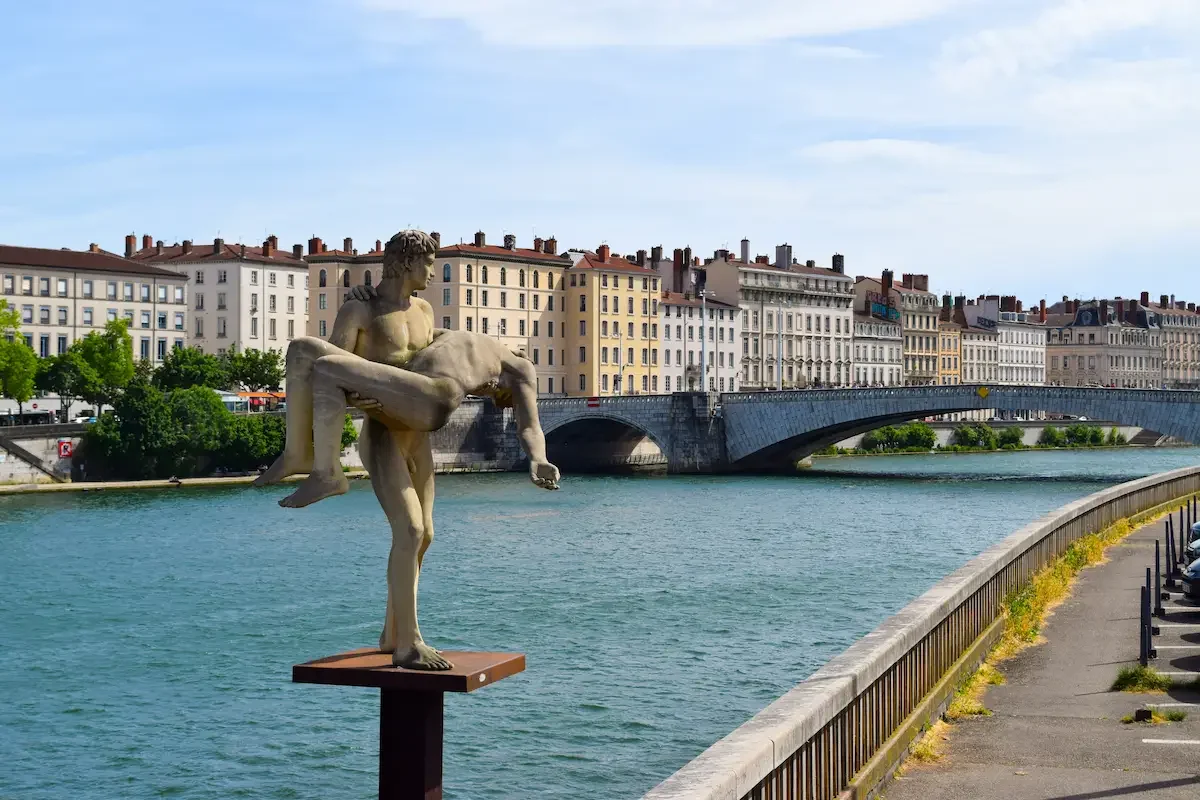
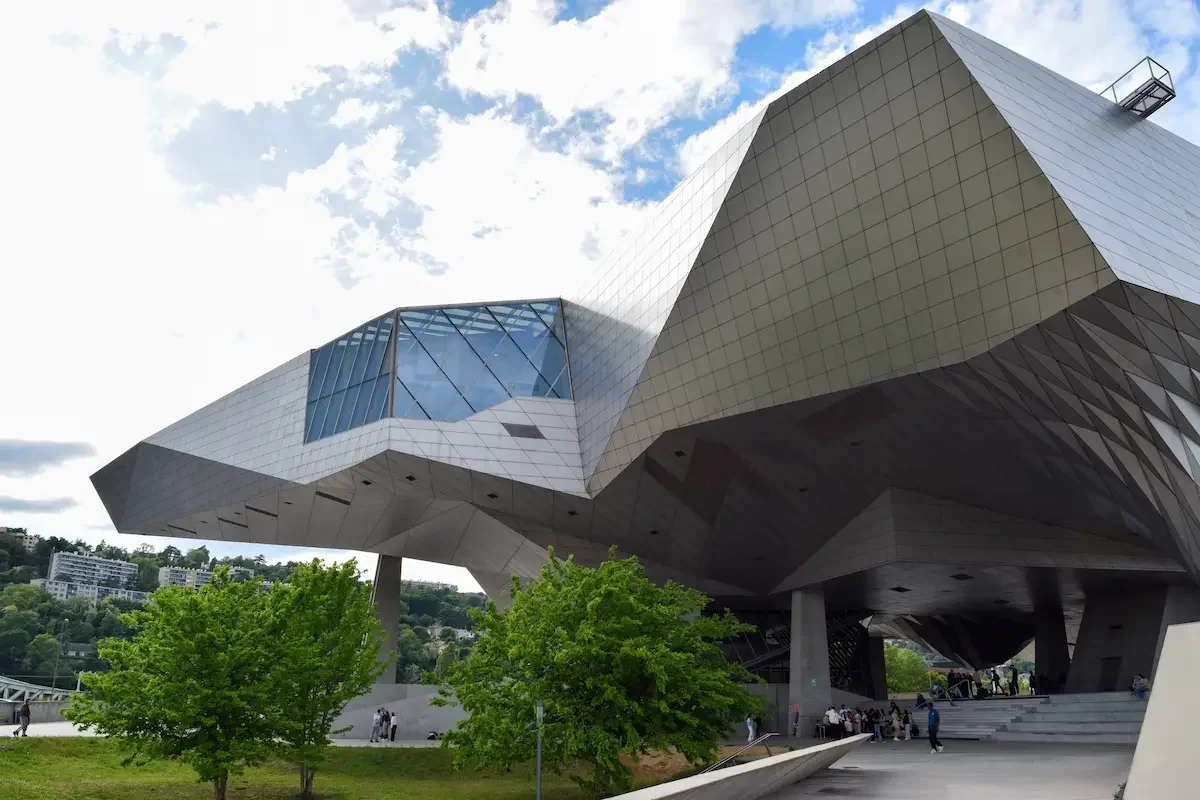
At the southern tip of the Presqu'île, where the Rhône and Saône finally meet, sits one of Lyon's most striking modern buildings — the Musée des Confluences. It's a science and anthropology museum housed in what looks like a crystalline cloud of glass and steel, and even if you don't make it inside, the building itself is worth the trip down to see.
We went inside for a few hours and checked out the collection, which was interesting and broader than you'd expect — natural history, ancient artefacts, indigenous cultures, and big-picture exhibits on how humans have made sense of the world. It's the kind of museum that works for almost anyone, plus basically everything is in English in addition to French so you won’t miss out on any context.
You can book entry tickets in advance, which is worth doing on weekends or during school holidays when it gets busy.
To get to the museum, it’s about a 30-minute walk from Place Bellecour or you can take tram T1 from the centre.
9. Take a day trip to Beaujolais
If you've got an extra day in Lyon and love wine (and who doesn't?), Beaujolais is the natural addition. The wine region sits about an hour north of the city — rolling hills, golden-stone villages, and the kind of French countryside that feels worlds away from any city, even though you can be back in Lyon in time for dinner.
We didn't make it on this trip but it's high on the list for next time, as I always love a French wine tour. The easiest way to visit is on a guided tour from Lyon — they handle the driving (and the tasting) and usually include 2–3 winery visits plus lunch at a local restaurant. GetYourGuide has a strong range of Beaujolais wine tours with options ranging from half-day tastings to full-day experiences with vineyard tours and lunch.
If you'd rather go independently, the train from Lyon Part-Dieu to Villefranche-sur-Saône takes about 20 minutes and puts you in the heart of the region — though you'll need to sort transport between vineyards once you arrive.
Getting to Lyon
Lyon is well-connected: direct flights from most major European cities take 1–2 hours, and the city has its own international airport (Lyon-Saint Exupéry, about 30 minutes from the centre by train or shuttle). But if you want to make a proper trip of it, take the train via Paris. Several operators run the Paris Gare de Lyon to Lyon Part-Dieu route (TGV, OUIGO, Trenitalia France) and the journey takes around two hours, so you can easily combine the two cities into one trip. I always use Trainline to compare prices and book — it pulls together all the operators in one place, which is much less faff than booking direct.
We did exactly that on the way back: Lyon to Paris in the morning, a few hours wandering and lunch in Paris, then the Eurostar home to London in the evening. It made the whole trip feel like a proper European weekend rather than a quick city break.
Where to stay in Lyon
We stayed at Hotel Bayard Bellecour and it was the perfect base for a short trip to Lyon: beautiful rooms with unique decor that made us feel like we'd stepped back in time, friendly service and most importantly the perfect location to walk or take the metro to all the spots I've mentioned above. I did a lot of research about the best place to stay, and it paid off.
The hotel is right on Place Bellecour, which is the natural centre of the city. From there you can walk to Vieux Lyon, the bouchons of the Presqu'île, and the Rhône in about ten minutes flat. If Bayard Bellecour isn't your style, anywhere on the Presqu'île (the strip of land between the two rivers) will put you in the middle of everything.
Final thoughts
Lyon punches well above its weight for a short break — easier to reach than people think, genuinely affordable compared to Paris or the south, and quite possibly the best city in France to eat your way around. If you've found this guide helpful, you might also like my Lisbon guide — another underrated European city break with food that's worth the trip alone.