Welcome to the gateway to the world
Last updated: July 2026
Vibrant, glamorous, grungy and utterly delightful, Hamburg is the perfect place to escape for a weekend away. The city’s maritime heritage is everywhere you look, from its sweeping harbour, to its old redbrick shipping warehouses, fresh fish bread rolls, circling seagulls and network of canals that rival even Venice. The city lives up to its historic nickname ‘the gateway to the world’ by offering a sense of freedom – in Hamburg you feel like you could jump on a ship, sail away and be anything or anyone, anywhere. Not that you’d want to do that straight away of course, because there is plenty to see, do, eat and drink in Germany's second biggest and perhaps most charming city.
If you’re still deciding where to stay in Hamburg, I’ve added a section on where to stay at the end, with a pick each for the Neustadt, HafenCity and the Schanze.
This post contains affiliate links. If you book through one of my links I earn a small commission — at no extra cost to you. I only recommend experiences I genuinely believe are worth your time and money.
Twelve top things to do in Hamburg:
1. Have brekky with Hamburg’s hispters at Nord Coast
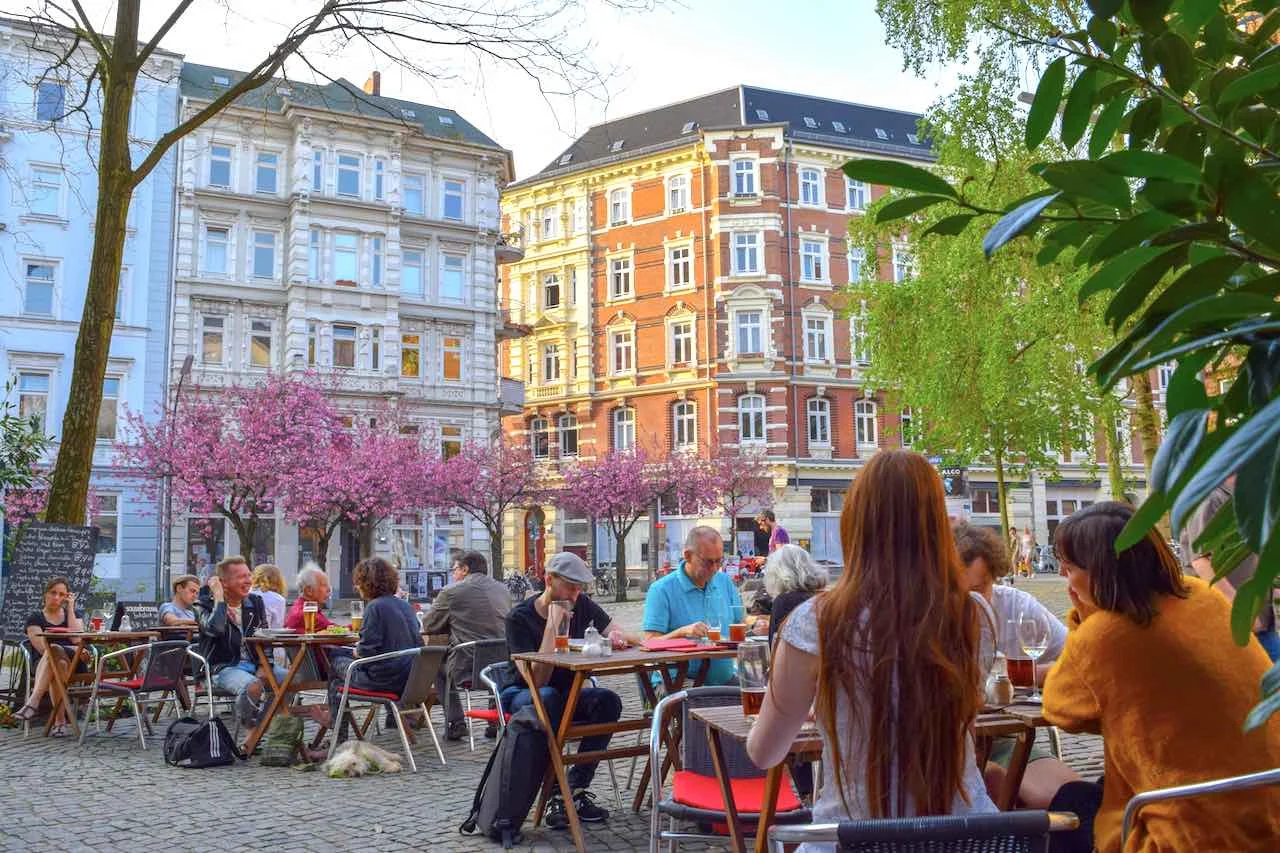
What I didn’t know about Hamburg before I visited, is that it is a bit of a hipster paradise, and Nord Coast café is the perfect example. With it’s scandi design vibes, canal views, delicious coffee and of course avo on toast, Nord Coast café is the best place to start your day in Hamburg.

2. Learn about Hamburg’s past at the Maritime Museum

Hamburg is a maritime city with one of the biggest and busiest ports in the world, so what better place to understand its seafaring history than at its Maritime Museum? The museum has nine 'decks' that cover 3,000 years of maritime history around the world. Its thousands of items, images, paintings and model ships are aptly housed in Hamburg's oldest preserved warehouse, the Kaispeicher B, which was once used to store shipped goods. I promise that even if you wouldn't usually visit this type of museum, you'll enjoy it.
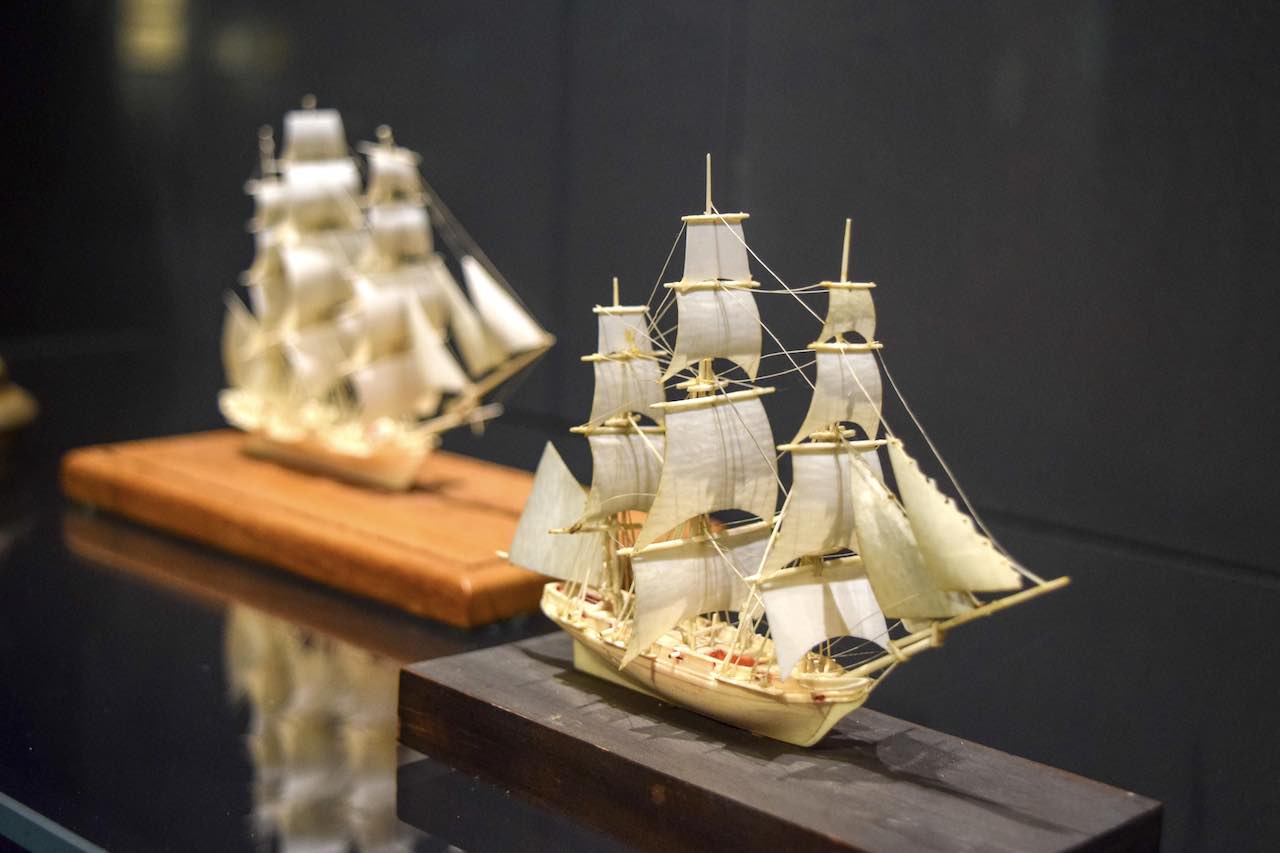
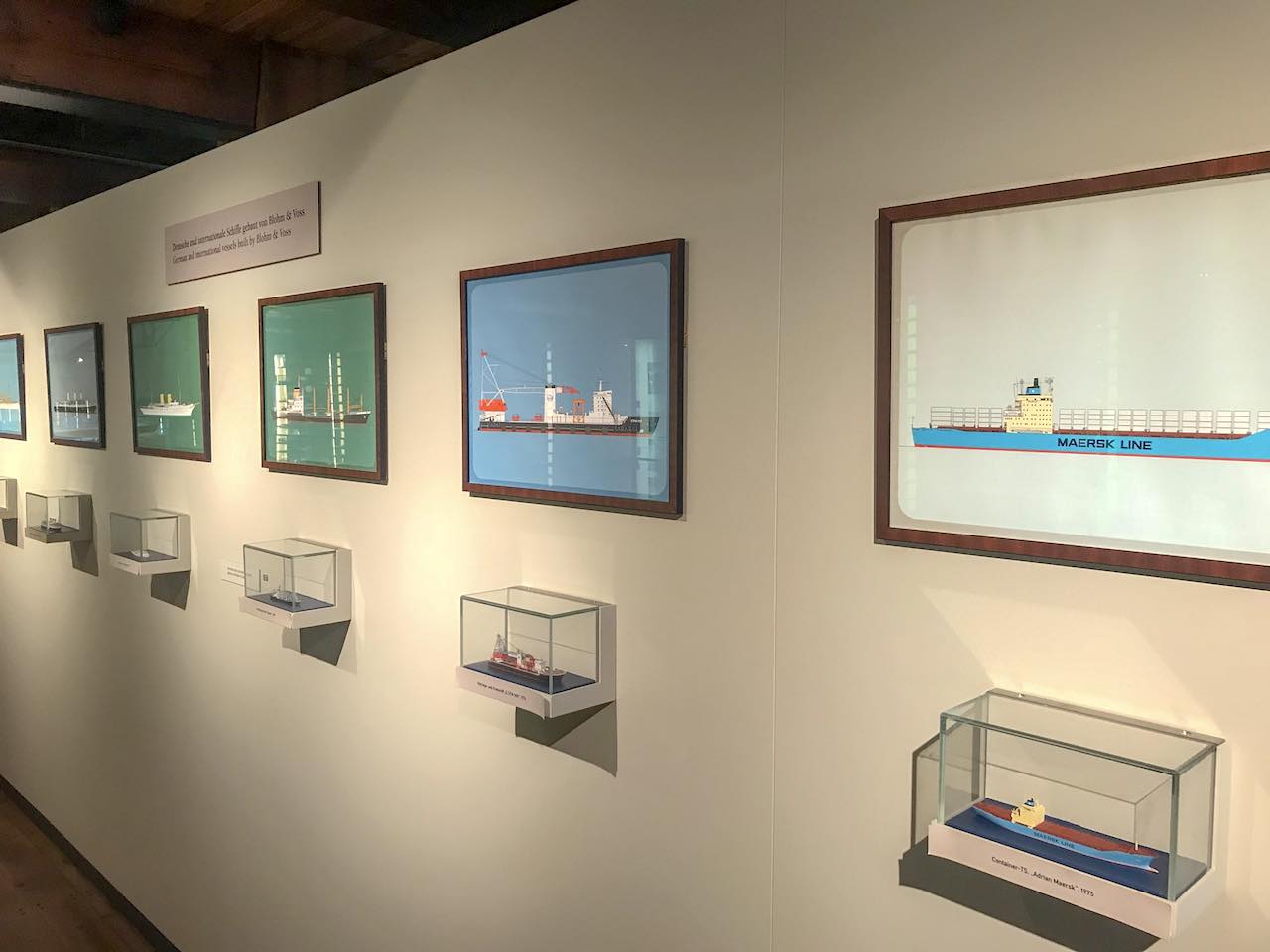
Amongst the many highlights were the tiny miniature ships on the upper floors where you can view armed forces, passenger and commercial vessels from across the modern era.
As you make your way downstairs, you'll find boats made out of bone, gold and silver – and yes, even Lego (don't miss the Queen Mary 2 made from a million Lego bricks).
You'll also learn a lot about how the shipping industry has changed the world in many ways, via the trading of goods and of course immigration. Plus you'll get to relive the glamorous heyday of commercial liners.
Tip: join one of the public guided tours (just €3 plus admission) for a really good overview, or grab the audio guide if you'd rather explore at your own pace. Book your tickets in advance here to skip the queue at peak times. You can also find more info at the museum's official site.
3. Head to the top of Hamburg’s Elbphilharmonie
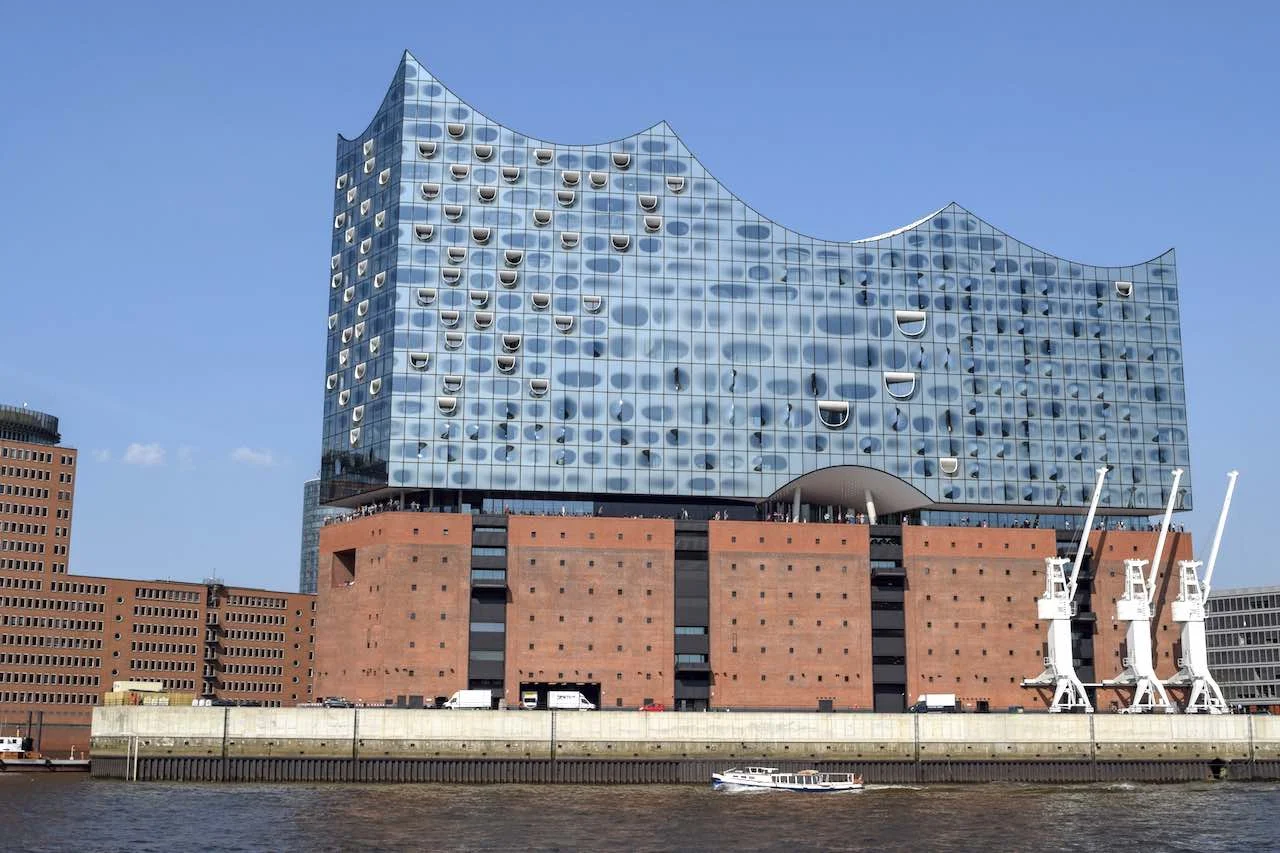
Few buildings have caused as much controversy as Hamburg's Elbphilharmonie concert hall. Considering it opened seven years late and €712 million over budget – it's easy to understand why. But in my opinion this work of art, which the locals call Elphi (but I have personally nicknamed the Elephant due to its size, colour and my inability to pronounce Elbphilharmonie), was well worth the wait and money. Visitors to Hamburg can enjoy Elphi from afar, thanks to her prominent place in the city's skyline on the water, but I'd also highly recommend heading inside to checkout its painstakingly designed interior and to see the city from above on its panoramic viewing deck.
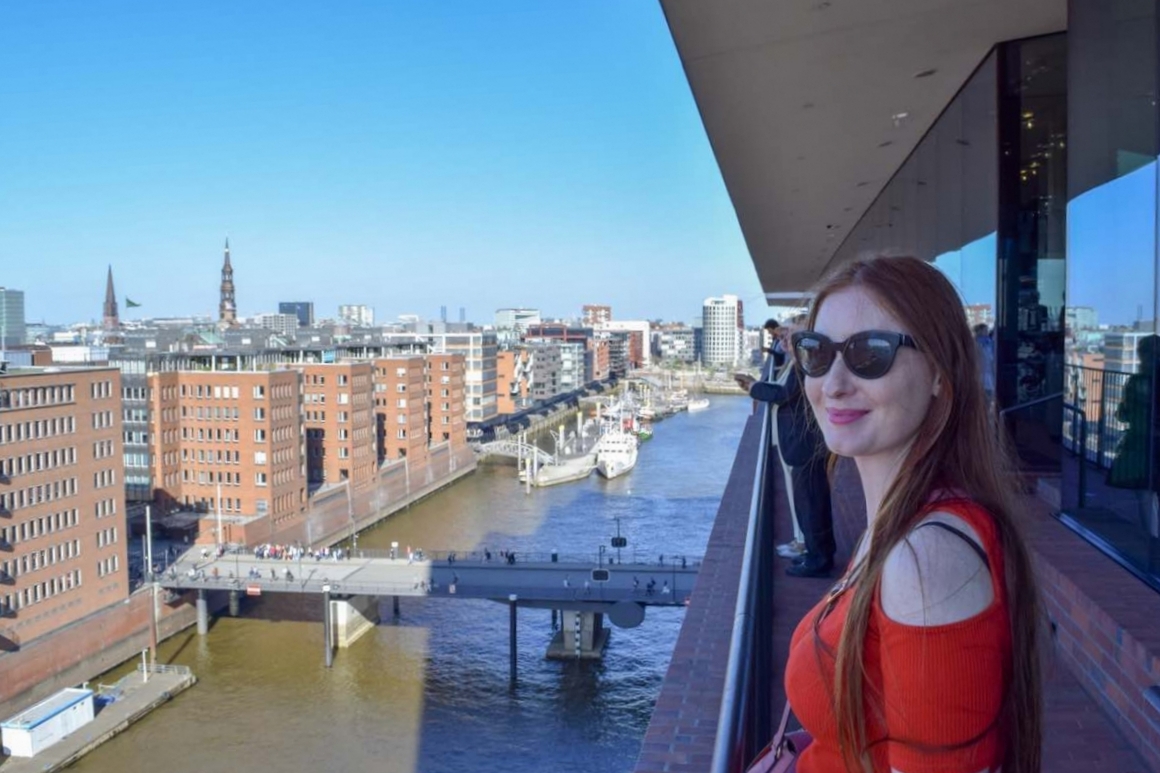
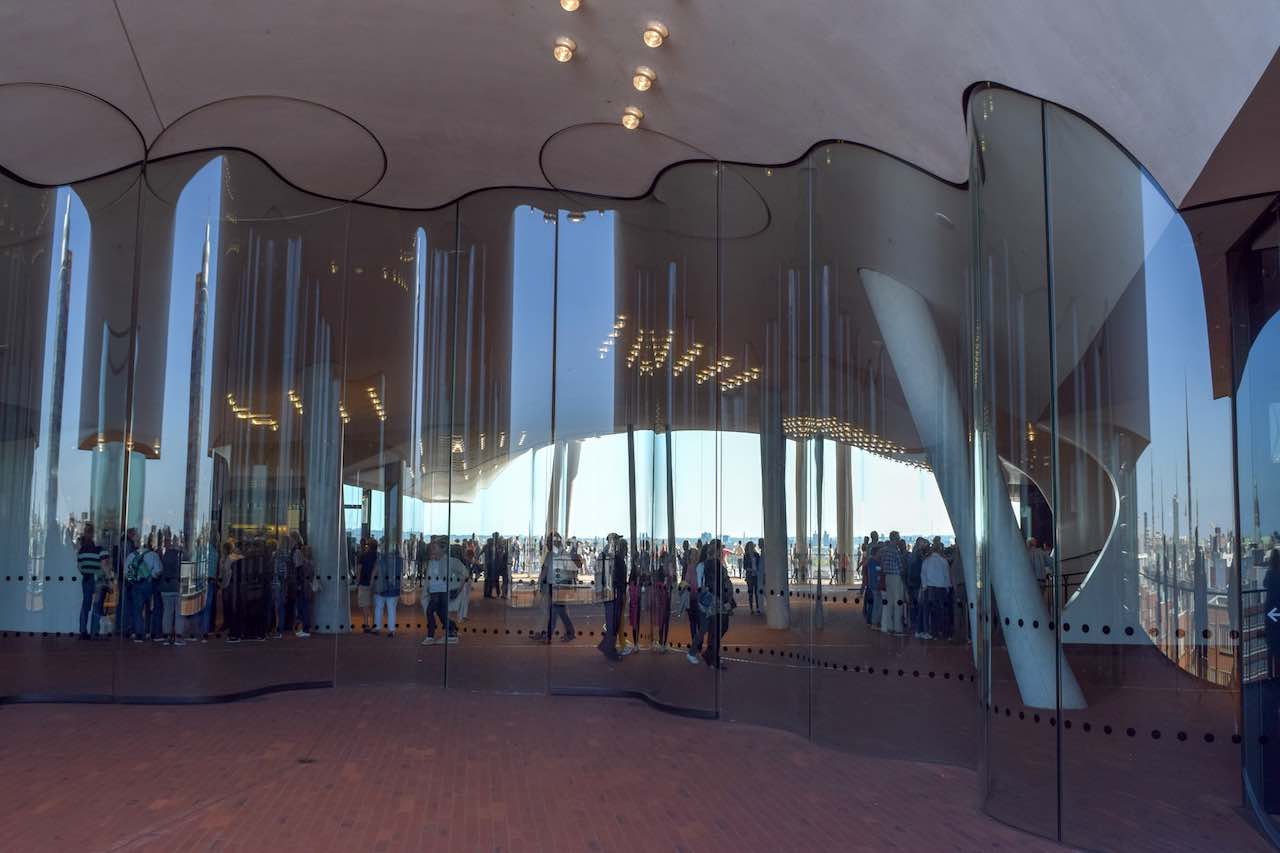
The Plaza – the public viewing level – is technically free, but these days you'll need to book a timed entry slot in advance. It's €3 per ticket through the official Elphi website, and well worth doing if you're visiting in peak season, when same-day tickets at the visitor centre often sell out. Once inside, you'll be transported up a set of futuristic and seemingly never ending escalators (the longest curved escalators in Europe, no less) until you reach the plaza on the roof of the old warehouse, where curved glass curtains reminiscent of waves greet you and lead you outside to the 360 degree balcony, that'll make you feel like you're strolling around the deck of a cruise ship.
If it's a nice day, grab a beer or a coffee from the café and sit back on the benches and enjoy watching the world go by for a few minutes before doing a loop to take in the views.
If you want the full story behind this glorious, ridiculous building – the cost overruns, the suspended grand hall, the architectural tricks – I'd really recommend booking a guided Plaza tour. Knowledgeable local guides walk you through the controversy and the construction, and it includes Plaza access so you don't need a separate ticket. It's about €27 and runs roughly an hour.
Fun fact: while you can't see it unless you're on a guided tour or at a show, the grand hall is suspended from its roof, to create perfect acoustics. Imagine the stress of constructing that... I'm starting to realise why the building was so expensive to build!
4. Go on a Harbour boat tour with Barkassen-Meyer

An hour-long boat ride is a must if you want to see Hamburg from its iconic harbour – including the Elbphilharmonie close up. Grab a German beer (or a radler in my case) and sit up on top of the boat while you learn about Hamburg's shipping history, its famous Fish Market, its richest seaside suburb and much more.
One thing to note is that the live commentary is in German. We had a German friend there who was happy to translate, but you don't need to – Barkassen-Meyer now offer audio commentary in 11 languages via a QR code you scan on board. Just bring your own headphones (small but important detail – there's nothing worse than turning up and realising you've forgotten them).
Book the one-hour harbor cruise – it's about €25 per adult, with free cancellation up to 24 hours before. You can also reserve now and pay later, which is handy if you're locking in your itinerary before you know exactly when you'll arrive.
Got more time? If you really want to see the scale of Hamburg's port – including the enormous container terminals at Waltershofer Hafen where the world's biggest cargo ships dock – the 2-hour harbour cruise is the one to book. It's the same company, same friendly skippers, just a much deeper dive into one of Europe's largest working ports. As above, you'll need to bring your headphones and scan the QR code on board to ensure you have English commentary.
5. Eat a delicious Fischbrötchen
Northern Germany is famous for its Fischbrötchen – crusty bread rolls packed with fried, baked or cured fish – and Hamburg's proximity to the sea means it lays claim to the tastiest in the country. The best place to try one is at the city's famous Fish Market (more about that below), but if you're not in Hamburg on a Sunday there are plenty of other spots to grab one. Keep an eye out and you'll find them everywhere, especially down at the Landungsbrücken floating docks where the harbour cruises leave from. Order a Bismarckbrötchen (pickled herring) or a Matjesbrötchen (cured young herring) for the classic Hamburg experience.

6. Wander around the iconic St. Pauli district

A visit to Hamburg wouldn't be complete without a stop off at its infamous red-light district. The St. Pauli neighbourhood's main boulevard, the Reeperbahn, is known to locals as die sündigste Meile der Welt – the most sinful mile in the world – and even by day it has a particular swagger to it. The area is full of colourful street art and characters, overflowing with cool cafes and bars, and home to plenty of Hamburg landmarks: the Davidwache police station (Hamburg's most famous, featured in countless German films), Hans-Albers-Platz with its live music spilling out from every doorway, and the steel silhouettes at Beatles-Platz (more on those just below).
St. Pauli is also home to FC St. Pauli, the football club whose skull-and-crossbones flag has become the unofficial symbol of the whole neighbourhood – the area takes great pride in its rebellious, working-class, deeply leftist identity, and you'll see the logo everywhere from t-shirts to graffiti.
If you want to dig deeper than just wandering, a guided walking tour of the Reeperbahn is a great call – the stories are wilder than any guidebook will print, and a good local guide will take you down side streets you'd never find on your own. There are options ranging from family-friendly historical tours to adults-only "Sex & Crime" tours if you want the full unvarnished version.
7. Follow in the Beatles' footsteps through St. Pauli
Here's something most people don't realise: when The Beatles arrived in Hamburg in August 1960, there were five of them, and neither Ringo nor the famous Fab Four lineup existed yet. It was John, Paul, George, plus bassist Stuart Sutcliffe and drummer Pete Best – five very young lads from Liverpool, playing marathon sets in the smoky clubs of St. Pauli.
They first arrived in Hamburg in August 1960 and played a brutal residency at the Indra Club on Große Freiheit, before graduating to the Kaiserkeller and eventually the legendary Star-Club. By the time they left Hamburg, they'd gone from a scrappy cover band to the tight, charismatic group that would soon take over the world. Hamburg is, genuinely, where The Beatles became The Beatles.
You can absolutely wander down to Beatles-Platz on the corner of Reeperbahn and Große Freiheit on your own – there are life-sized steel silhouettes of the band where the Star-Club used to stand before it burned down in 1987. But the history is so much richer with a guide who knows the stories.
I'd recommend booking a Beatles walking tour – the best ones are led by musician guides who break out a guitar or ukulele to play the songs the band performed in those very streets. It's a couple of hours, runs around €20-25, and even non-superfans I know have come away converted. Worth doing in the late afternoon so you finish around dusk, when the Reeperbahn's neon really comes alive.
Tip: combine the Beatles tour with dinner at a nearby St. Pauli bar afterwards – you'll already be in the right neighbourhood and you'll be primed for a beer or two after all the storytelling.
8. Try the lavender flavoured ice cream at Luicella's
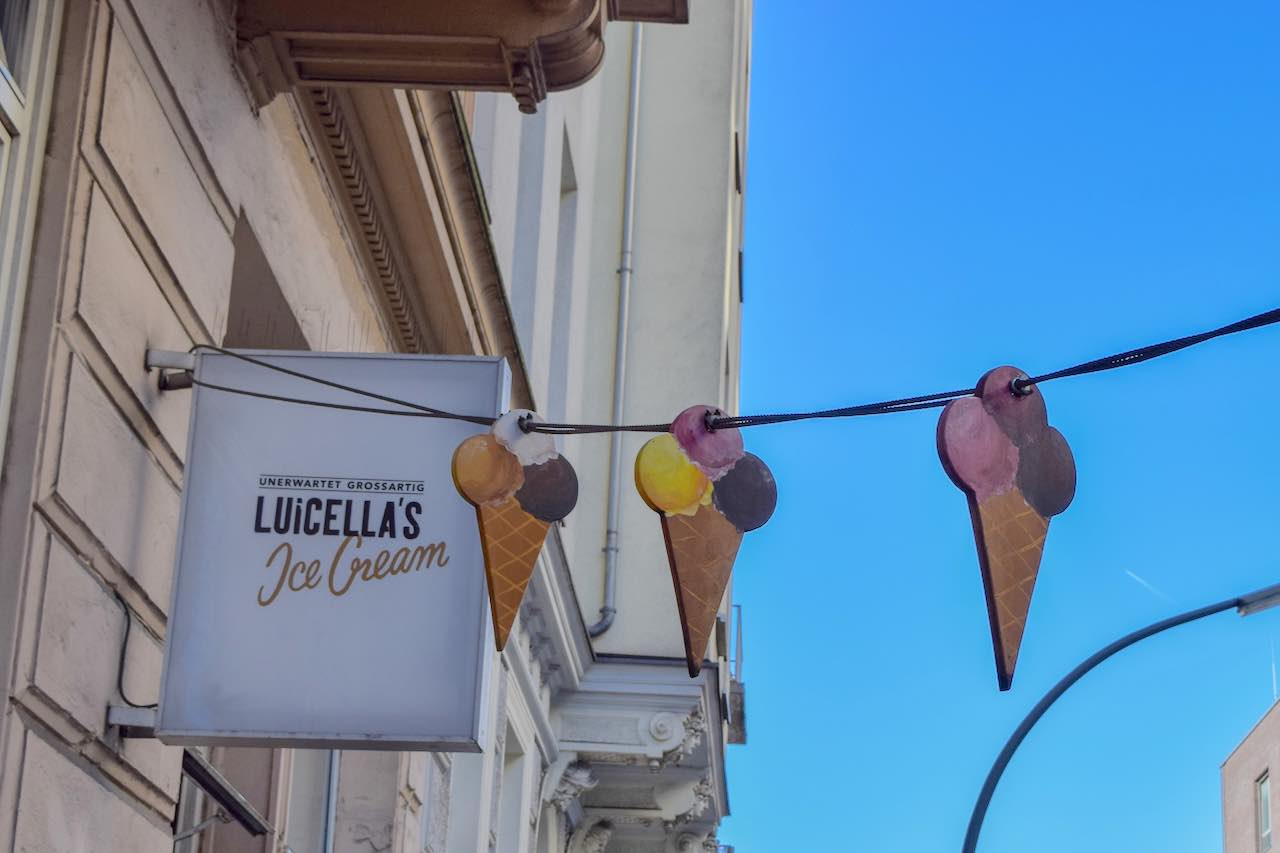
Luicella's Ice Cream has become a bit of a Hamburg institution – for good reason. Their homemade 'Eis' is 100% natural and comes in a range of quirky and delicious flavours, from lavender to peanut with caramel-salt toffee, and they now have 10 shops dotted around Hamburg (plus one in Lübeck). I went to the St. Pauli location (Detlev-Bremer-Straße 46) and thanks to the warm weather had to queue for about 10 minutes before getting my hands on one of these tasty delights.
9. Have Dinner in the Schanzenhöfe Brewery District
I have always had a soft spot for German breweries, so much so that to one of my German friends' horror at how touristy I was being, I once spent Christmas day at Munich's famous Hofbräuhaus.
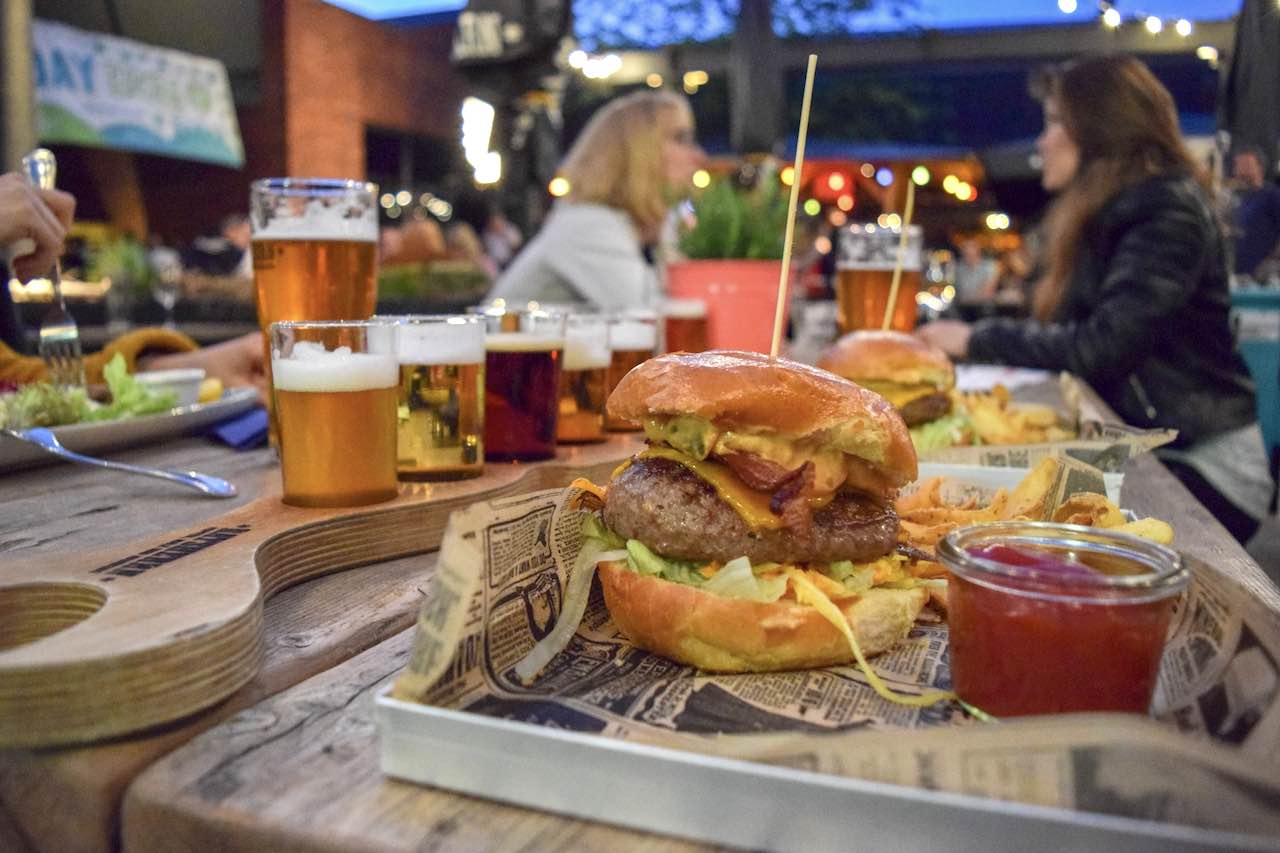
But in Hamburg you can avoid fellow tourists and head to a brewery with a hip twist in the city's Schanzenhöfe Brewery District. We spent the perfect night at Altes Mädchen – the Braugasthaus attached to the Ratsherrn craft brewery, with around 30 beers on tap, 50+ bottled, and bread baked fresh in their own stone oven (try a Stulle – a Hamburg-style open sandwich – with anything from smoked eel to regional cheese).
If it's a cold night you can snuggle inside by the fire, and if it's warm, you can sit outside, surrounded by fairy lights and locals and drink craft beer until your heart is content. It's right opposite Sternschanze S-Bahn, so very easy to find.

10. Head to the famous Fish Market on Sunday morning

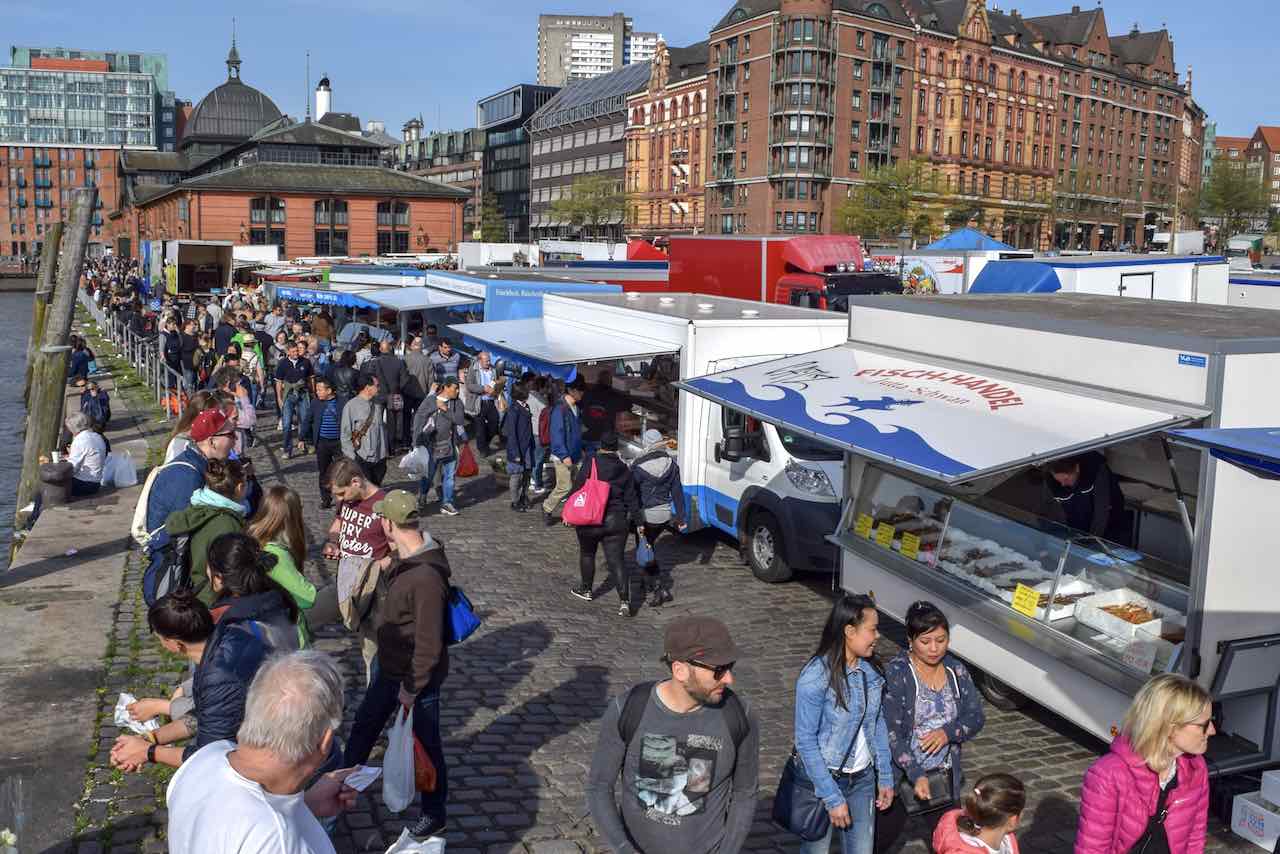
Who wants to get up on holiday at 5am on a Sunday morning to go to a fish market? Not me, and to be honest, I didn't. After power walking from the S-Bahn, we barely made it to Hamburg's legendary fish market in time, arriving at what was essentially a massive, boisterous party five minutes before it officially closed at 9.30am.
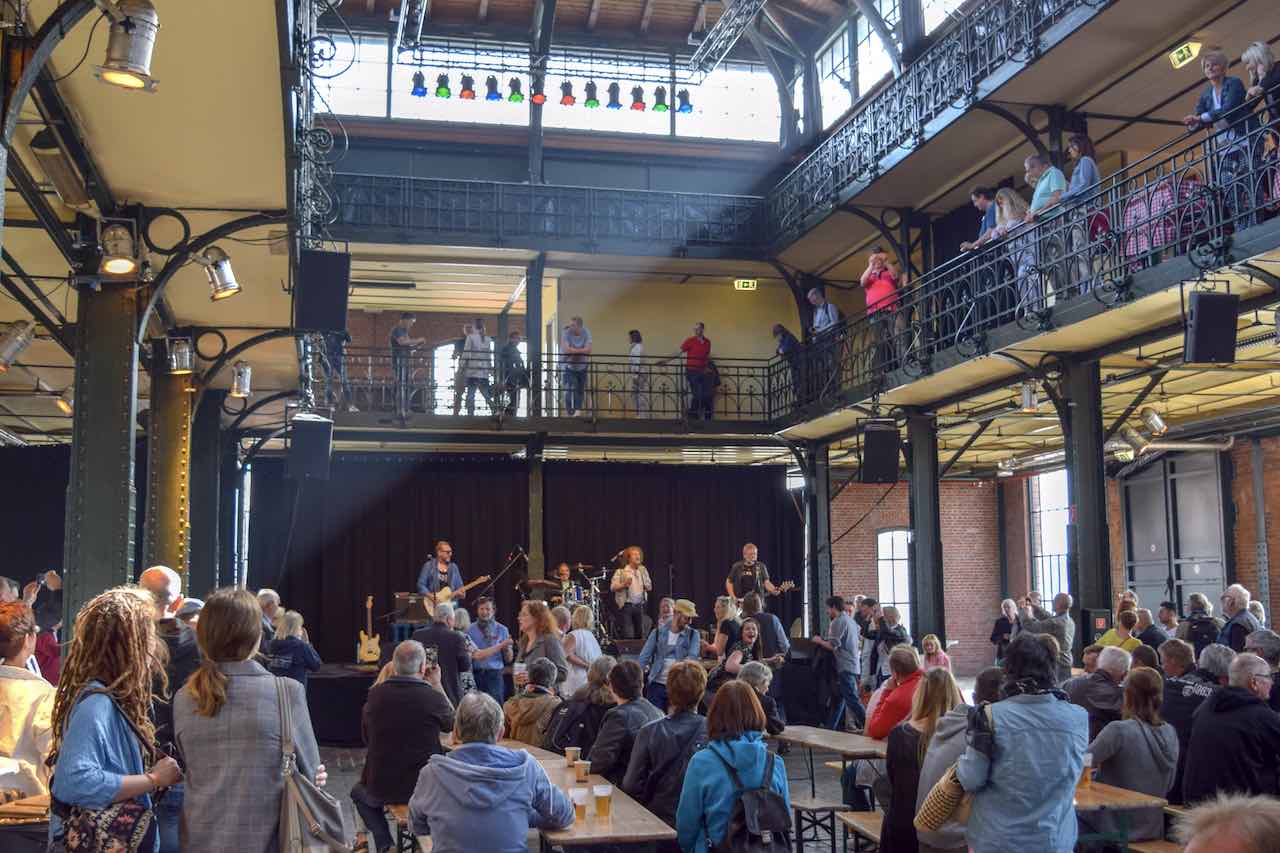
When we arrived, the beers were flowing, the locals were out in force, the sun was shining, and the fruit and fish sellers were bellowing out their last minute bargains. Inside the adjacent beautiful Fish Auction Building, bands played covers of famous rock songs while people of all ages danced along.
But the pinnacle was the fresh Fischbrötchen – or fish bread rolls – that we bought from the Marx u. Sohn stall. The roll was fresh and crunchy and the battered fish with garlic sauce just melted in my mouth. It's up there in one of my top food moments and I would go back to Hamburg just to have another one.
The market has been running since 1703, which I love — there's something wonderful about knowing that for over 300 years, Hamburgers have been arguing over the price of fresh fish on the banks of the Elbe at dawn.
Tip: Go early! And know the opening hours change with the season – it runs from 5am in summer (April–October) and 7am in winter (November–March), closing at 9.30am sharp either way. Don't do what we did and turn up just as it's beginning to close. Find out more about the Fischmarkt.

11. Visit the world’s largest model railway at Miniatur Wunderland

I know what you're thinking, because I thought the same thing before I visited: 'A miniature museum is for kids and I am a sophisticated adult who has no interest in such things.' But a visit to one of Hamburg's most popular and eccentric tourist spots is an absolute must – even for sceptical grown-ups.
Miniatur Wunderland is the world's largest model railway and a Guinness World Record holder. See tiny trains, cars, planes and people moving through Swiss valleys, Italian coastlines, Scandinavian fjords, Las Vegas neon, German cities, and – more recently – Rio de Janeiro, Patagonia and Monaco's Formula 1 grand prix. Knuffingen Airport, with real model planes that taxi, take off and land, is one of the most mesmerising things I've ever seen. The whole exhibition cycles between day and night every 15 minutes (powered by half a million LEDs), so the scenery completely transforms while you're there.
Plan for 2-3 hours minimum – an hour really isn't enough, and most people end up staying longer than they expected. It celebrates its 25th anniversary in 2026, and the upcoming Asian section (planned for around 2027) means there's always something new being added.
Tip: queues regularly run up to an hour on busy days, so book your timed entry ticket directly through the official Miniatur Wunderland website in advance. They also do a brilliant "Big Tubs & Small Trains" combo ticket (about €35) that bundles a one-hour harbour cruise with your Wunderland entry – great value if you haven't done a harbour tour yet, though note the boat commentary is in German only. Find out more about Miniatur Wunderland.
12. See an eclectic mix of art along the Kunstmeile
If you love art, you've come to the right place. Kunstmeile translates to "art mile," thanks to the fact that Hamburg has six renowned art institutions within a short walk of one another in the city centre. We made it to three of the six on our visit but plan to tick off the rest next time. The three we managed were:
The must-see Hamburger Kunsthalle

This is one of Germany's most famous and important museums, containing over seven centuries of European art with a focus on North German art, from medieval to contemporary. Even the building itself is a piece of art, as you can see from the above photo.
While making your way through, keep your eye out for:
Caspar David Friedrich's Wanderer above the Sea of Fog – one of the most reproduced paintings in the world, and arguably the Kunsthalle's most iconic piece (Friedrich is one of Germany's most renowned artists, and his 250th anniversary in 2024 brought renewed attention to his Romantic landscapes)
Paintings by Edvard Munch – though not The Scream itself, you'll find striking works from across his career
Pieces by world-famous artists including Rembrandt, Monet, Manet, Picasso, and Warhol.

Get some photography tips at the Deichtorhallen
Hamburg's twin Deichtor buildings host the city's Hall for Contemporary Art and its House of Photography. When we visited, the contemporary hall had a thought-provoking and expertly curated exhibition which explored three artists' interpretations of the social, cultural, and political complexities of their times. The photography museum is an absolute gem, full of photos from various eras.

See the young and talented’s art at the Kunstverein
Hamburg's Kunstverein celebrates young international artists and examines current discourses. While the space is big, it doesn't take too much time to see, as the displays are quite spaced out. This wasn't my favourite of the Kunstmeile but it's definitely worth a look around.
The three I haven't yet made it to: the Bucerius Kunst Forum (known for excellent rotating exhibitions of classical and modern art), the Museum für Kunst und Gewerbe (decorative arts, design and crafts — particularly strong on Art Nouveau), and the Kunsthaus Hamburg (the newest addition, focused on contemporary art).
Tip: If you plan to visit two or more, the Kunstmeile 3-day pass is well worth it at €35 (€28 with the Hamburg Card), giving you unlimited entry to all six institutions over 72 hours. Buy direct via Kunstmeile Hamburg.

Where to stay in Hamburg
Hamburg is bigger than it feels on a map, and its districts are further apart than they look. I’d recommend basing yourself in one of three areas: the Neustadt in the centre, HafenCity down by the water, or the Schanze out west. Each one is a good place to come back to at the end of a day.
You’ll probably want to see all three anyway, and the easiest way to do that is Hamburg’s metro, the U-Bahn, which is fast and goes everywhere you’ll want to go.
Here are my three recommendations, one for each location.
Best for a design-led splurge, in the Neustadt: TORTUE Hamburg is the one to book if you want the hotel to be part of the weekend rather than just somewhere to sleep. It sits on Stadthausbrücke, two minutes from the Neuer Wall and five from the Jungfernstieg, so you can easily walk to the Rathaus, the Alster and the main shopping streets. The rooms face onto interior courtyards, the bathrooms are marble, and downstairs there are five bars and three restaurants, including a French brasserie and a Chinese-Japanese dining room.
The rooms are on the small side for the money, but they are beautifully put together, and the hotel gives you plenty of other places to be. Five bars and three restaurants is more than you'll get through in a weekend, which is a nice sort of problem to have.
Best for the harbour and the Elbphilharmonie: 25hours Hotel Hamburg HafenCity puts you ten to fifteen minutes' walk from the Elbphilharmonie, with Speicherstadt and Miniatur Wunderland about as close, so you can walk out of the lobby into the best of the harbour. It commits completely to its maritime theme and gets away with it: cabin-style rooms, a vinyl listening room, a sauna included in the rate. Breakfast is good enough to plan the morning around. If it's full, its sister hotel 25hours Altes Hafenamt is a few streets away, in the old harbour master's office.
Best for the Schanze on a budget: Superbude St. Pauli is the most fun of the three. The rooms are cheerfully quirky, built from reclaimed furniture and with a games console in most of them, and the Schanze is a good place to be based: record shops, cheap Vietnamese food, and bars that aren't aimed at stag parties. Sternschanze S-Bahn is ten minutes' walk, and despite the name it's not on the Reeperbahn: it's on Juliusstraße, about fifteen minutes away.
One thing to know before you book: it doesn't take Friday or Saturday arrivals for much of the autumn, so it suits a Thursday or Sunday start. Worth checking your dates.
A note on timing your booking: Hamburg hotel prices are driven less by tourists than by the trade fairs the city hosts, which can push rates up across the whole city with no warning. Whenever you go, it's worth a quick look at what's on in the city before you book. It takes two minutes and it can save you a hundred pounds.
Helpful hints to get the most out of your trip:
I’d recommend buying the Hamburg Card, which provides free unlimited travel on public transport (including trains, buses and ferries) and discounts to many of the city’s main attractions and restaurants.
If you plan to see more than one of the Kunstmeile art museums, the €35 three-day pass gives you unlimited access to all six institutions over 72 hours – or €28 with a Hamburg Card. Worth it if you're hitting two or more.
As with most German cities, the train network in Hamburg (the S-Bahn and U-Bahn) is extensive, easy to use and safe. I'd highly recommend it as a way to get around quickly and cheaply, including to and from the airport.