How Albania stole my heart
Last updated: June 2026
Tell people you’re going to Albania for a holiday and they’ll look confused and probably ask you why. Tell them you’re going to the Albanian Riviera and they’ll start to look a little more interested (turns out adding the word ‘Riviera’ onto anything can make people perk up). But the fact remains, Albania isn’t considered a top tourist destination by… well… anybody really.
But those people are missing out, because there are plenty of reasons to visit the Albanian Riviera – its stunning beaches (that aren’t jam packed with other tourists), its world heritage sites, its weather, its food and of course the price – it’s not as cheap as it used to be, but it’s still good value compared to nearby Greece or Croatia.
This post contains affiliate links. If you book through one of my links I earn a small commission, at no extra cost to you. I only recommend places and experiences I genuinely believe are worth your time and money.

Why Albania?
While I was in Albania I’ve never had so many people contact me (friends and strangers alike) to ask what I thought, if I’d recommend it and if it was safe. The answers are that I loved it and I’d definitely recommend it. The contrasting combination of beautiful beaches, breathtaking UNESCO world heritage sites, quirky cities and friendly locals make Albania a hidden treasure well worth discovering. And if you’re worried about safety – don’t be! The Albanian Riviera is very safe, it’s full of local families having fun; in fact, I felt safer than I have in plenty of other European locations.
So throw away any preconceived notions you have of this country and keep reading to find out how to get there, where to stay, what to do, when to go and even a few fun facts about Albania.

How do I get there?
I usually go to pretty accessible places in Europe so I don’t bother writing about how to get there. But I didn’t really know how to get to the Albanian Riviera, so here are the two routes worth knowing.
Via Corfu (the easy option and the one I recommend): Catch a flight to the Greek island of Corfu and then take the cheap and quick (30 minute) ferry across to the Riviera’s unofficial capital and launching point Saranda. This is what I did, and it’s still the most straightforward way in if your priority is getting to Ksamil and the southern Riviera with the least fuss.
Via Tirana (more flexible, longer drive): If you’d rather fly directly into Albania, Tirana International Airport is well connected from most European cities. The drive south to the Riviera is around four to five hours, but it’s a much easier road trip than it used to be. The upside of this route is that you can stop in Berat, Gjirokastër or other inland towns along the way and turn the trip into a wider Albanian itinerary.
The best city to stay in: Ksamil
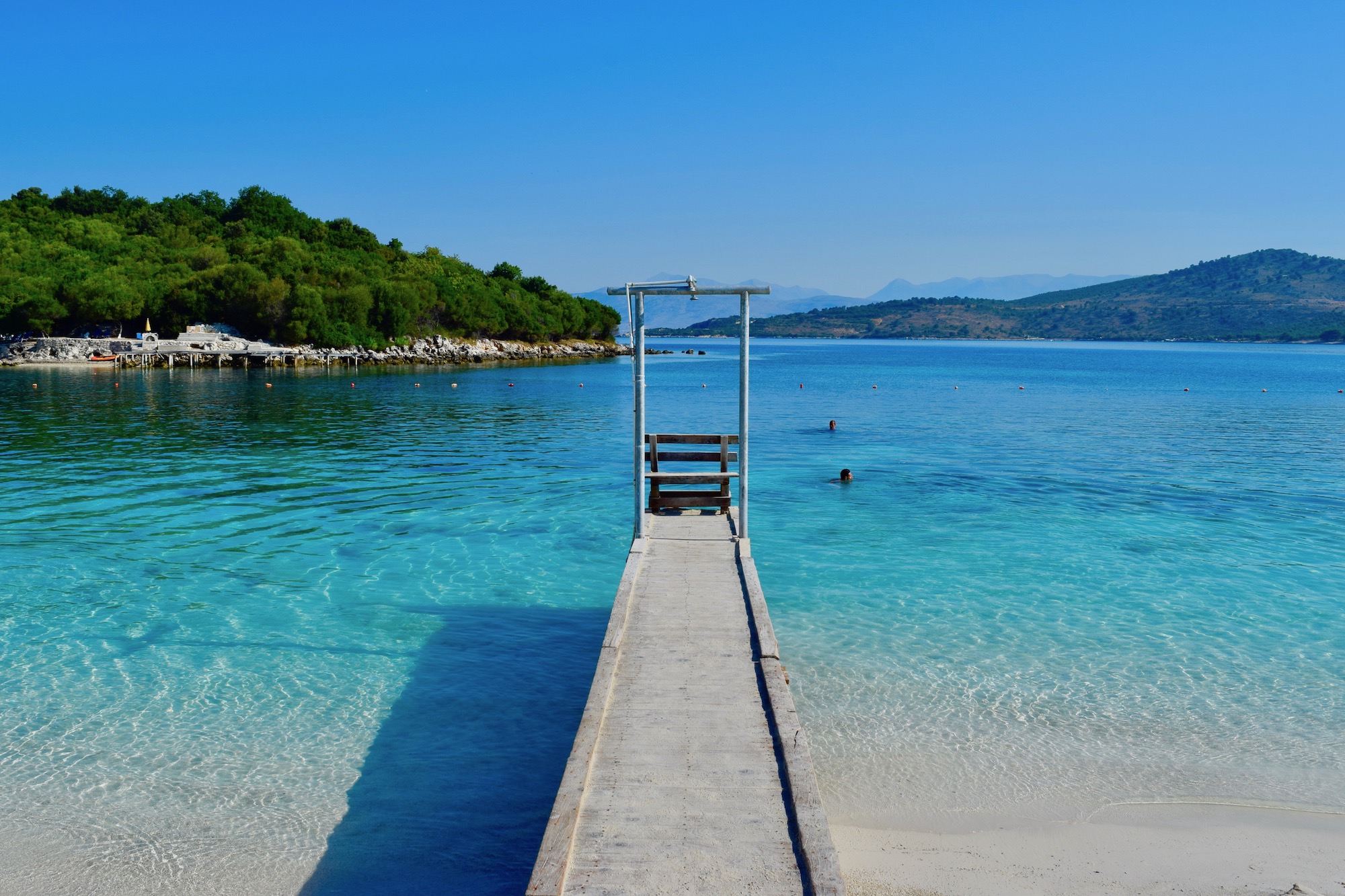
If you do an image search of the ‘Albanian Riviera’ the majority of images that come up are of Ksamil (which is pronounced as ‘Xamil’ by the way). Why? Because it’s picture perfect. And it’s the best place to base yourself if you want to spend most of your time lounging on the beach and eating (that’s what holidays are for right?).
Here are three picks across price points, all within easy reach of the beaches.
For a proper treat: Sondor Hotel — a boutique hotel on the quieter edge of Ksamil with an infinity pool looking out over the Ionian Sea, a plentiful buffet breakfast using local ingredients, and beautifully designed rooms with private balconies. A short walk to the beach and considerably cheaper than anything comparable in Greece.
Best mid-range: Blue Eye Hotel — a small, family-run hotel two minutes from the beach with a pool (ground floor rooms open straight onto it), and breakfast on the rooftop terrace: homemade yoghurt, fresh pastries and proper coffee. Only 17 rooms, so it has a quiet, unhurried feel that the bigger places in Ksamil don’t.
Best on a budget: Otto Hotel — modern rooms with balconies, a rooftop breakfast with fresh local produce and a proper coffee machine, and a three-minute walk to the beach. I know this part of Ksamil well, it’s the right spot: close enough to the beach to walk but away from the busier strips.
A note on booking: Albania is genuinely good value by European coastal standards, which means you can usually afford to stay somewhere nicer here than your budget would stretch to in Croatia or Greece. The good places fill up fast in July and August, so worth locking something in early if you’re travelling in peak season.
Getting to Ksamil
Ksamil is a 12km drive down south from Saranda, and very simple to get to by cab or bus (which is super cheap). When we got off the ferry from Corfu we caught a cab to Ksamil (they’ll be waiting out the front of the terminal), and came back by bus.
The best things to do in the Albania Riviera
Ksamil is the place to base yourself, but the Riviera has more going on than just the beach. Here’s what’s actually worth doing while you’re there.
Be transported back in time in Butrint

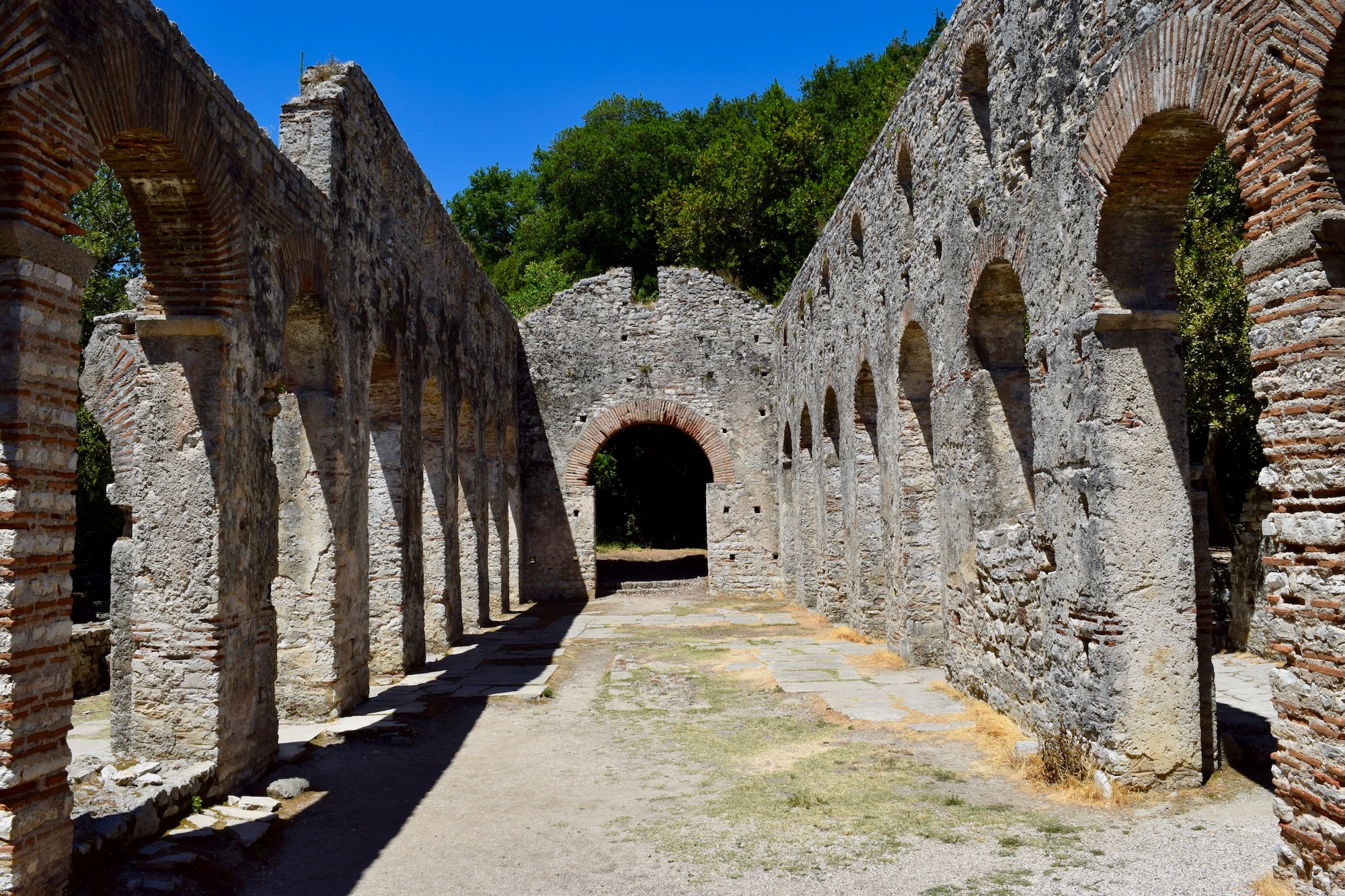
Butrint is Albania’s crowning jewel. This prehistoric UNESCO site was one of the highlights of the trip for me.
Butrint was an Ancient Greek and later Roman city with evidence of habitation as far back as the 12th century BC. Its ruins, which remain extremely well intact today, are spread over a large area of a wider national park. It takes a good three hours to explore them properly. You’ll see what remains of a 3rd-century-BC Greek theatre, Roman baths, and a 6th-century paleo-Christian baptistery decorated with colourful mosaics (which sadly are mainly covered by sand to protect them) among other things.
I'm not sure I can do justice when describing Butrint, it's one of those places you just have to see for yourself. Because it's so well preserved, it allows you to think a lot about what life must have been like thousands of years ago and it's hard not to get a bit of perspective from that. If it's on your Albania itinerary, and it should be, this guided tour from Saranda is a brilliant way to see it with the historical context it deserves — it also takes in Lëkurësi Castle, which has lovely views over Saranda and the bay. It departs from Saranda rather than Ksamil, but that's a short cab ride and worth it.
Getting there: If you'd rather go it alone, local buses run once an hour from Saranda to Butrint via Ksamil (and vice versa). We caught the bus back to Ksamil from Butrint, which took about 20 minutes. On the way there we walked, which took about an hour from Ksamil — I'd seen a few people online saying it's a lovely jaunt through the olive groves and I'm sure it is, if you know how to find the path. We did not know how to find the path and ended up on the main road like idiots for an hour. Learn from my mistake.
Tip: Pack a lunch and plenty of water. There's a café on site near the museum, but it can be closed or overpriced depending on when you visit — better to come prepared, especially in the summer heat.
Visit the Blue Eye
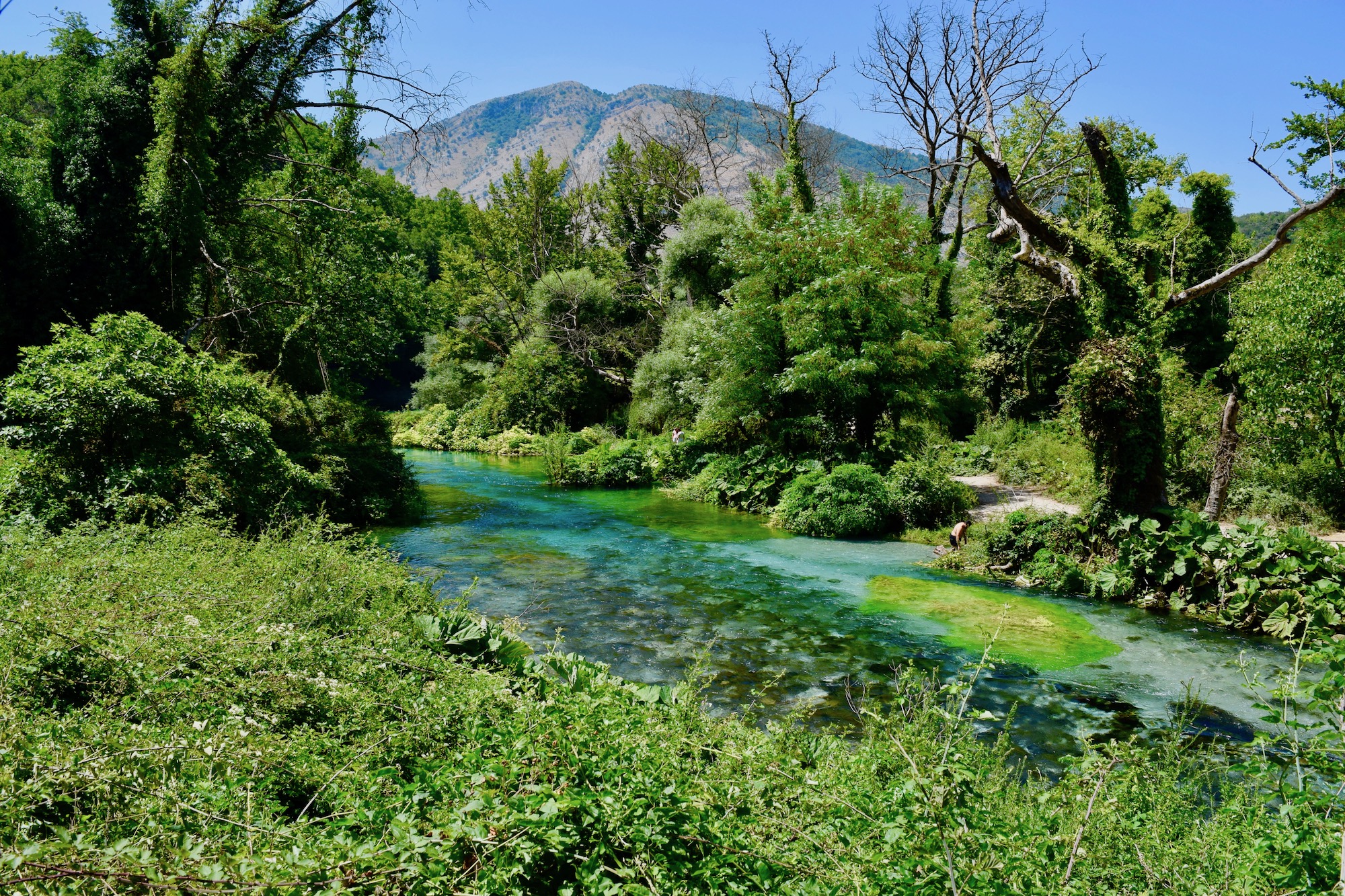
The Blue Eye (or Syri I Kalter as it’s known to the locals) is a breathtakingly beautiful fresh water spring, located about 20kms from Saranda. It’s a little bit of a trek to get there – but it’s worth it to see the crystal clear water bubble up from a sparkling, aquamarine hole that’s at least 50 metres deep. The spring is classed as a natural phenomenon because nobody really knows what it is or how it formed (although there are plenty of local myths).
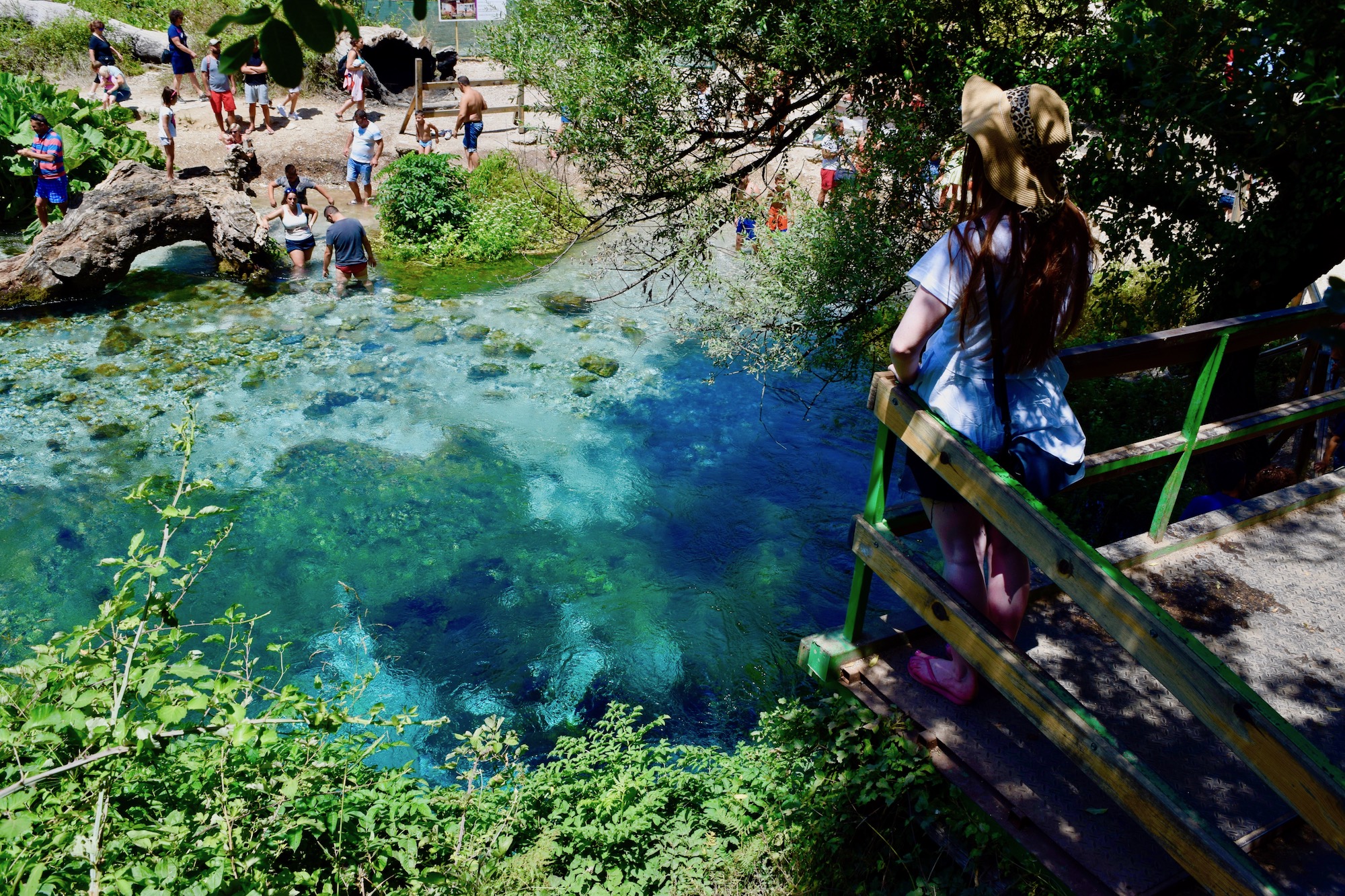
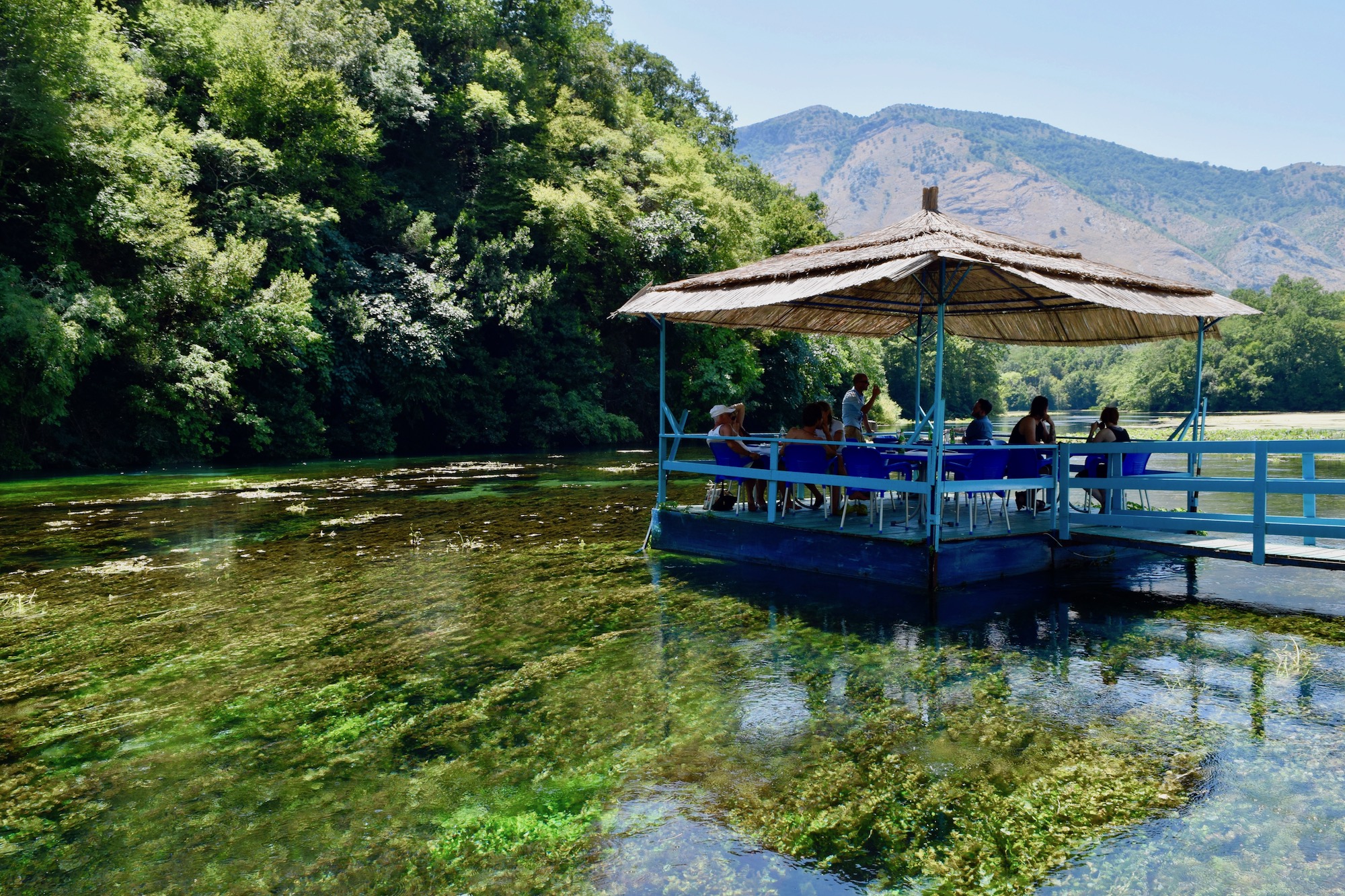
We visited in July when it was 36 degrees (so quite warm, even for an Australian!) but it was like a calm and cool oasis. Once you see the blue water, turning slowly lighter as it heads downstream contrasting with the surrounding green trees and vines, you’ll feel a world away from the more hectic vibe of other tourist destinations in Albania. And I promise it is as stunning in real life as it is in the photos.
If you’re feeling brave, bring your bathers and join the many others flouting the ‘don’t dive’ rules. But be warned the water is absolutely freezing, so I personally saved my swimming for the nearby beaches where the water wasn’t quite as frosty!
Getting there: We visited the Blue Eye as part of a tour and I’d recommend doing the same. This tour from Saranda covers the Blue Eye, Lëkurësi Castle and Gjirokastër in one day (around £35 per person, which is exceptional value for what you get). Otherwise, you can hire a car and drive yourself, or take a cab for around 40-50 euros with the driver waiting while you explore. The local bus drops you 2kms from the spring and runs irregularly, so I wouldn’t recommend it if you have other options.

Beach days in Ksamil
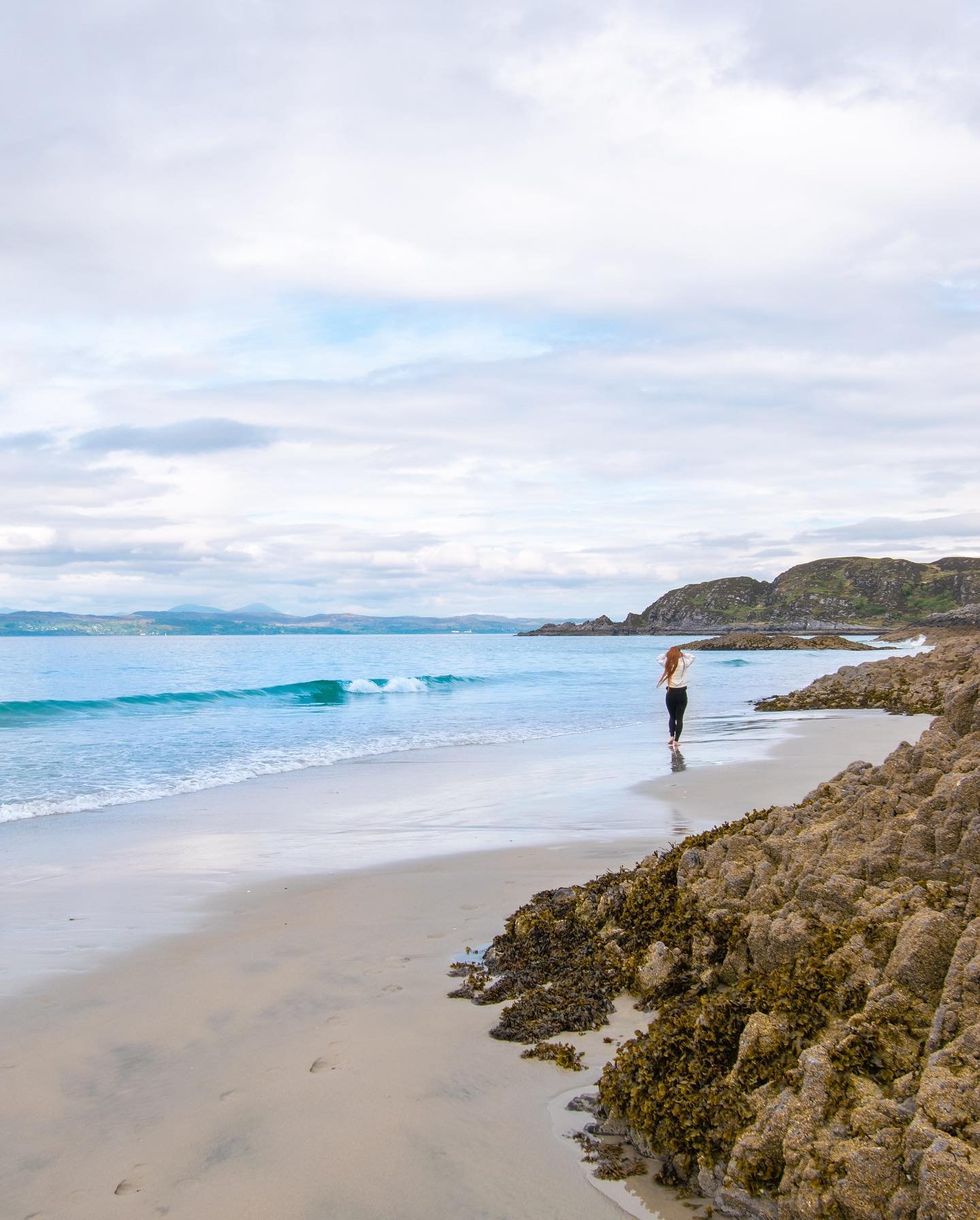
Ksamil’s beaches reminded me of Greece’s. The majority of them are privately owned and back onto restaurants and cafes that supply beach lounges and umbrellas at a cost (if you come after 3pm it’s cheaper). Make sure you get there early in summer, as the spots go quickly (and the best ones appear to be cheekily reserved for the locals — but hey — fair enough). Once you’re settled in you can swim in the calm azure water or lay around reading and eating the donuts, fresh fruit and other sweet treats that locals wander around selling.
While I had a very lazy trip and didn’t participate, there are also plenty of speedboat rides and other activities waiting for the more thrill-seeking tourists. So you’re set.

An afternoon in Saranda

Saranda is the biggest town on the Albanian Riviera, and worth a few hours of your time even if you’re based in Ksamil. It has a more lived-in, working-town energy than Ksamil: busier, less polished, but with a real local rhythm to it.
The city gives you a good feel for what day-to-day life is like in Albania. In my experience, Albanians are family-oriented, social and love to have fun. At night, Saranda’s promenade is packed with families and friends wandering around eating, drinking coffees and having a good time.
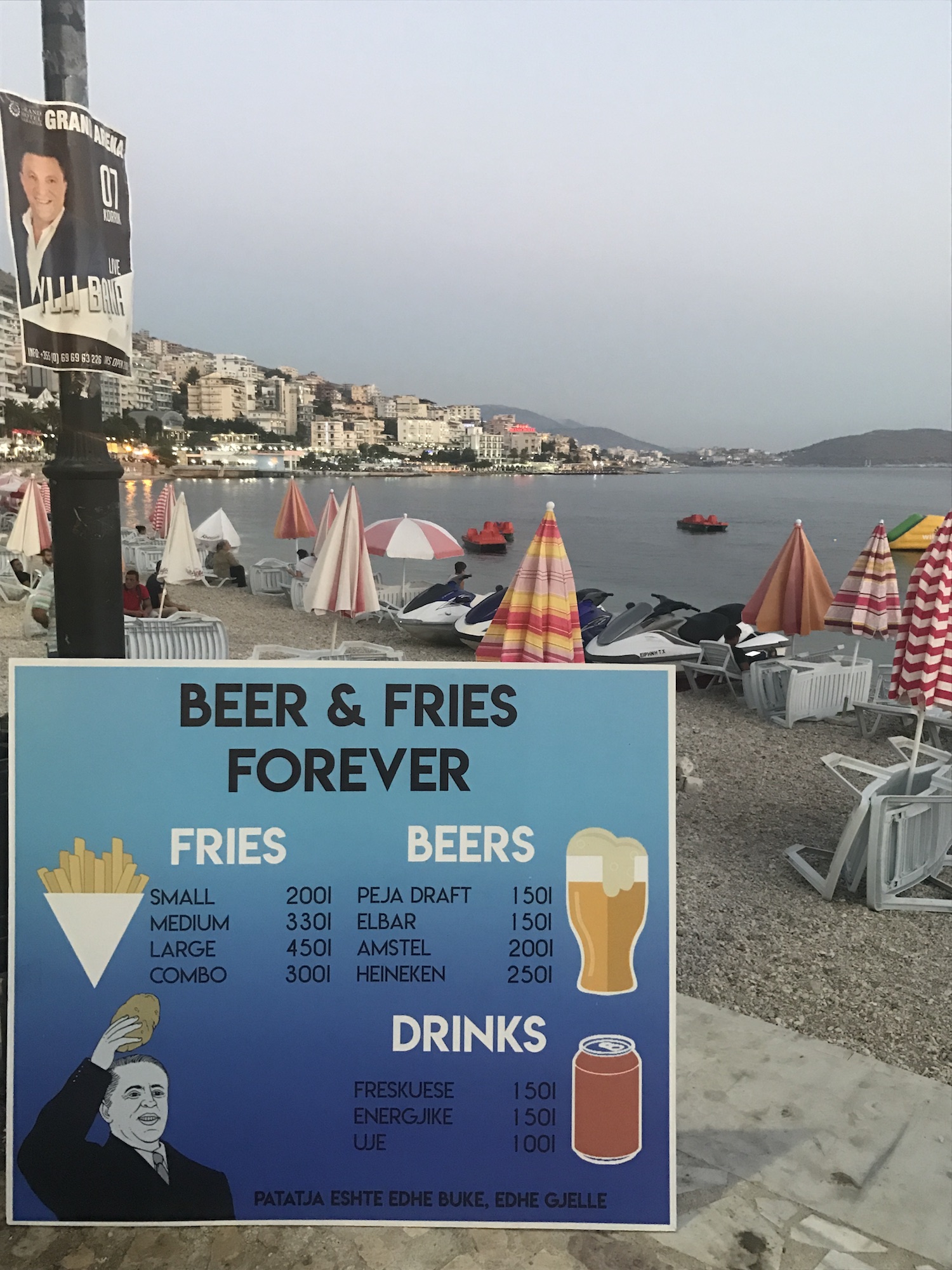
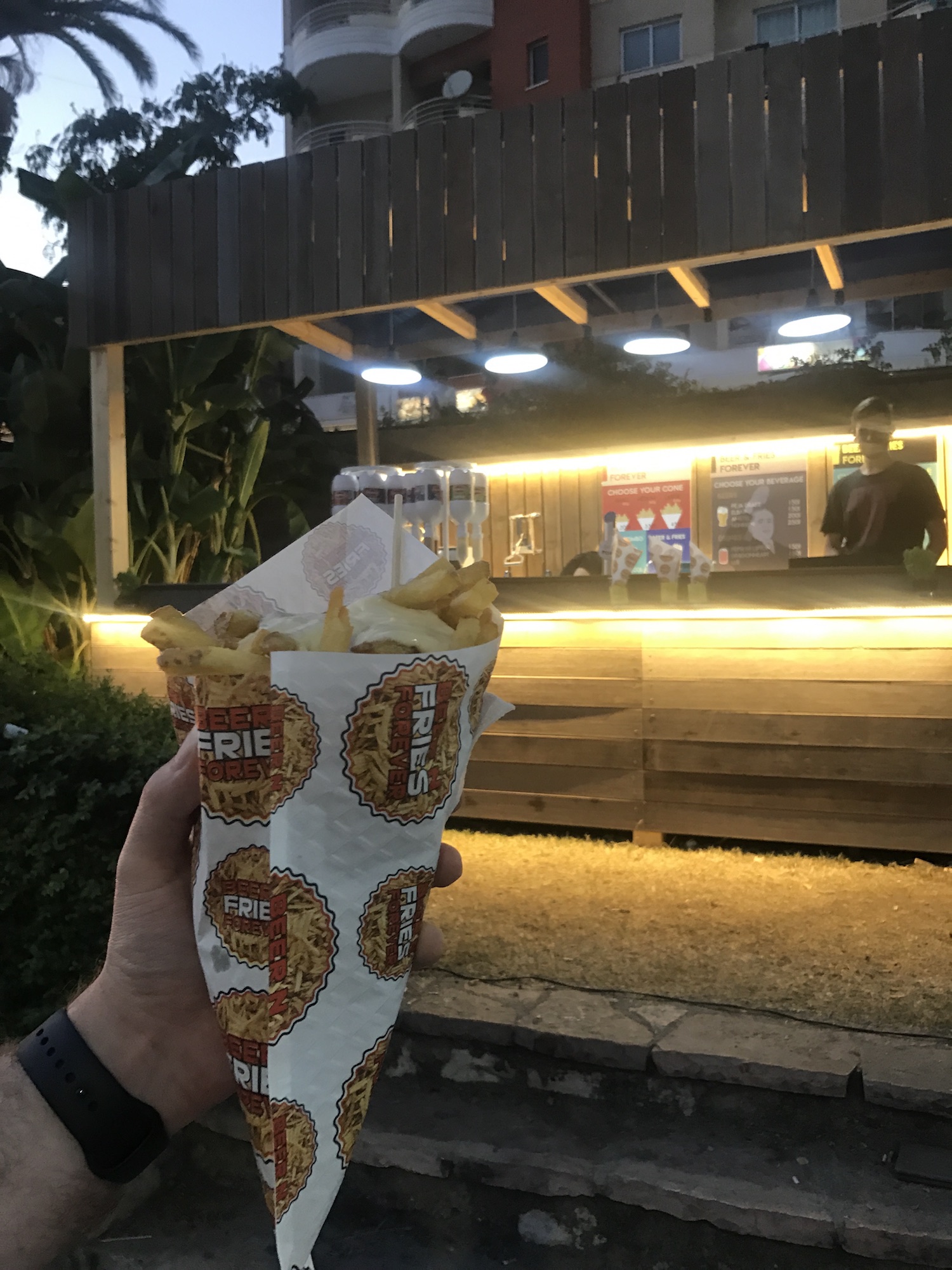
If you’re there in warmer weather, when food and market stalls line the walkways, try some snacks from Beer and Fries Forever where they hand cut the fries on site and serve them with a massive range of delicious sauces. Yum.
Eating out in Ksamil
If you don’t know much about Albanian food, it’s quite like Greek food, aka it’s delicious. Ksamil has a good range of restaurants, most of them on or near the waterfront, so you're unlikely to eat badly here.
My favourite restaurant in Ksamil was Beach Bar Restaurant Korali. It’s on the water, with an open balcony, so you can watch the sunset from your table (and by the way the sunsets here are phenomenal). The seafood and moussaka were my favourites and the cheesecake was so good I had one every day I was in Ksamil (I was on holiday after all).
While you won’t see it on the menu, they serve carafes of local wine at a great price.

When to visit the Albanian Riviera
The Riviera works best between late May and early October. July and August are the warmest and busiest months, with sea temperatures perfect for swimming and the towns at their liveliest, but expect crowds and book accommodation well in advance.
I’ve visited in July when the heat was intense but the sea was glorious and the long evenings made up for it. I’ve also been to Albania in September when it was still warm, so I’d say that June and September are the sweet spots: warm enough to swim, but with fewer tourists and more relaxed prices on hotels and restaurants.
I love visiting Mediterranean places in the shoulder seasons of May and October, but there are some trade-offs. The weather can be cooler and more unpredictable and some restaurants might be closed, but you get a much more authentic feel and the lowest prices of the year. November to April isn’t really Riviera weather, though Tirana and the inland towns are perfectly visitable year-round if you’re doing a wider Albanian trip.
A few things to know before visiting the Albanian Riviera
Cash: like in many of the surrounding countries, it’s worth carrying some cash with you at all times in Albania. Cards are now more widely accepted than they used to be, particularly in hotels and bigger restaurants, but in smaller places, beach bars and local cafes you might still need lek (the local currency). Get some out soon after arriving.
English: Okay, I don’t like writing this because I hate how lazy English speakers (me included!) kind of just expect the world to speak our language. But a lot of people have asked me how I found the level of English in Albania. Nearly everybody we interacted with had reasonable, if not good English, so no need to worry about that.
A few things you might not know about Albania:
Albania is a country many of us know little about so here are just a few things that show how interesting this remarkable country is:
The name of Albania in the country’s mother tongue is Shqipëria (it’s easier to pronounce than it looks as the ‘q’ is silent).
Albania is one of the few countries in Europe without a McDonald’s.
Albania was the only European country that managed to liberate itself without the intervention of foreign troops in World War II.
Albania is also the only European country to increase its Jewish population during World War II from 200 to 2000 thanks to it becoming a safe haven for those fleeing persecution from other European countries.
The country was largely closed off from the rest of the world from the 1960s to the early 1990s under the communist rule of dictator Enver Hoxha.
Albania is home to more than 700,000 concrete bunkers, constructed in case of invasion during its communist years by Hoxha. You can still spot them today as you travel around the country.
Many Albanians lost their life savings in the 1990s after investing in Ponzi pyramid banking schemes, which were widely supported by the government.
Albania applied for EU membership in 2009 and has been an official candidate since 2014. Accession negotiations are now well underway and Albania is considered one of the frontrunners among candidate countries, with membership potentially on the cards by 2030.
There are apparently more Albanians living outside the country than its internal population of about 2.8 million.
Despite being born in what is now the capital of Macedonia, Skopje, the most famous Albanian and the country’s first Nobel Peace Prize winner is Mother Teresa.
So are you convinced?
Albania is a stunning and relatively untouched country in terms of tourism — compared to nearby Greece and Croatia at the very least. If you’re looking for something different from the usual Mediterranean suspects, I’d highly recommend visiting the Albanian Riviera. Albanians are aware that their country sometimes gets a bad rap, so the already warm and welcoming locals work extra hard to show you how wrong that reputation is. Tourism will take off at some stage in this amazing country, it’s a matter of when not if. So go now before fighting other tourists for a spot on the beach becomes the norm.